
IndustryInsightsについて
2026-07-27 17:30:46
5GC ULIパラメータと5Gコアネットワークにおけるユーザー位置報告
gNBが報告するユーザー位置情報、NR ULI構造、TAI、NCGI、NCI、登録エリア、MRUの発生条件、および位置情報がAMF、SMF、PCF、NEF、アプリケーション機能へ流れる仕組みから5GC ULIを解説します。

ベッケテレコム

5GC ULIパラメータと5Gコアネットワークにおけるユーザー位置報告

5Gコアネットワークでは、ユーザー位置情報をコアネットワーク自身が直接検出できるわけではありません。UEのリアルタイムなネットワーク上の位置は無線アクセス側、特にそのユーザーを収容しているgNBから得られます。gNBは、UEがどのセルを使用しているか、そのセルがどのトラッキングエリアに属するか、さらに無線側の位置をどのように上位へ報告すべきかを把握しています。このため、ULI、すなわちUser Location Informationは5GC信号における重要なパラメータです。

ULIはgNBからAMFへNGAP信号で運ばれます。これによりコアネットワークは、登録、モビリティ管理、セッション処理、ポリシー制御、サービスルーティング、アプリケーション公開に必要な位置参照を得ます。実際のエンジニアリングでは、ULIは住所レベルの測位結果ではありません。TAIやNR CGIなどの無線アクセス識別子から構成されるネットワーク位置識別情報です。これらの識別子により、5Gコアはトラッキングエリアおよびセルの単位でUEの所在を理解できます。
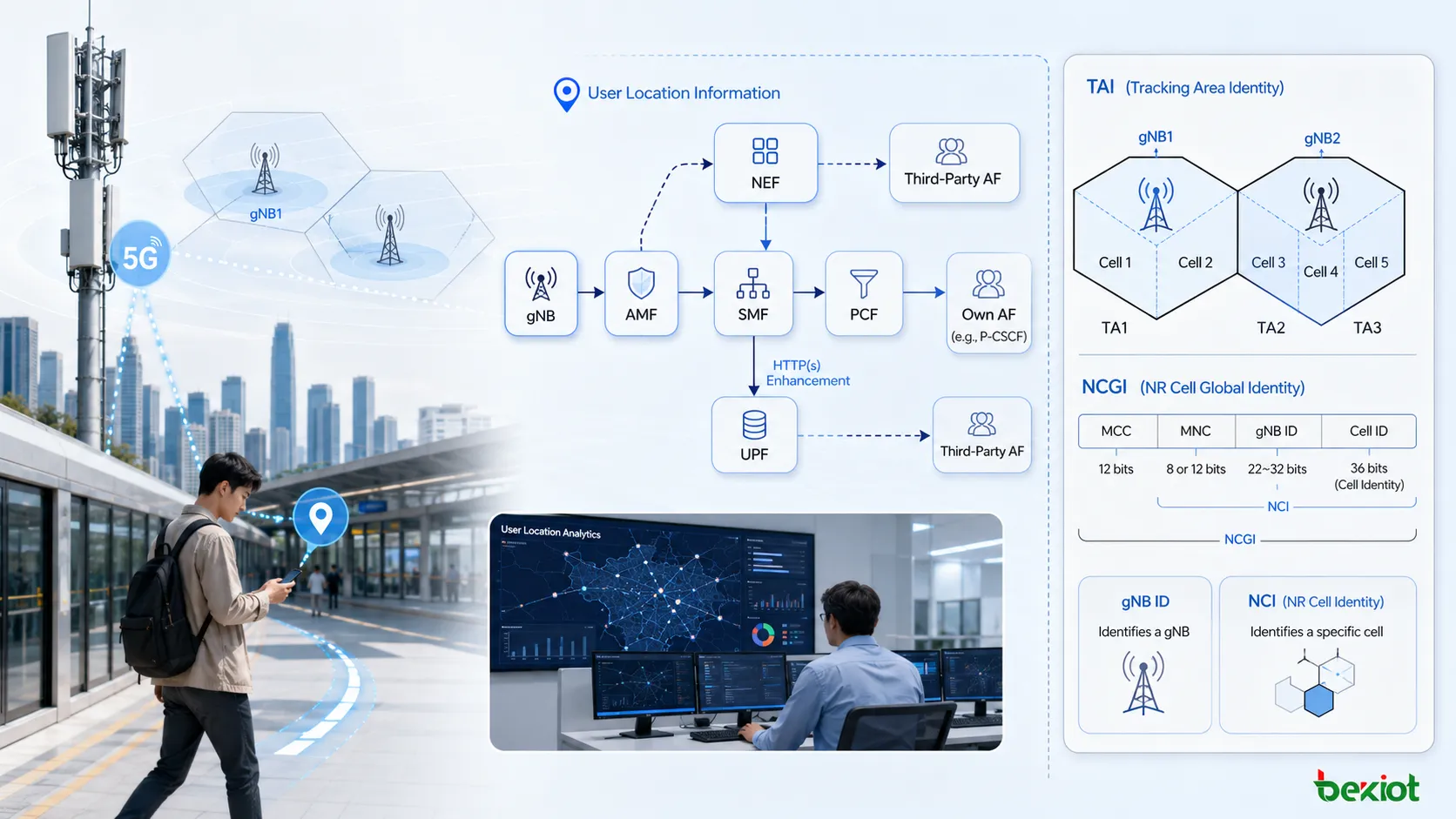
gNBがTAIとNR CGIを含むUser Location InformationをNGAP信号でAMFへ送信する5GC ULI報告図
SA構成では、ULIは主にTAIとNR CGIを使用し、gNBがNGAP信号を通じてUEの位置情報を5Gコアへ報告できるようにします。

ULIがコアへ到達する仕組み

ULIの報告方向はgNBからAMFです。gNBは複数のN2メッセージにULIパラメータを含め、AMFがUEの現在のネットワーク側位置を取得できるようにします。AMFの判断は、UEがどこにいるか、どのトラッキングエリアに属しているか、モビリティ更新や登録更新が必要かどうかに依存するため、これは特に重要です。

ULIを運ぶ可能性があるNGAPメッセージには、PDU Session Resource Release Response、PDU Session Resource Modify Response、PDU Session Resource Notify、UE Context Release Complete、UE Context Modification Response、RRC Inactive Transition Report、Handover Notify、Path Switch Requestがあります。NAS転送では、Initial UE MessageUplink NAS Transportが特に重要です。これらは5G NAS信号を運ぶため、AMFはNAS関連手順の中でUEのリアルタイム位置情報を取得できます。

この設計により、位置報告のロジックは無線ネットワークに近い場所に置かれます。gNBがサービングセルを把握し、関連する識別子をNGAPで転送します。その後、AMFはそれらを広いモビリティおよびセッションコンテキストの一部として利用します。

NR ULIに含まれる内容

ULIには複数の位置情報形式が定義されています。大きく分けると、NSA関連の構成ではE-UTRA ULI、SA関連の構成ではNR ULIを含めることができます。5GスタンドアロンネットワークではNR ULIが中心です。

NR ULIは主に、5G TAINR CGINCGIとも呼ばれます)の2要素で構成されます。TAIはトラッキングエリアを識別し、NCGIは特定のNRセルをグローバルに識別します。両者を組み合わせることで、コアネットワークはUEのトラッキングエリア情報と無線セル情報の両方を取得できます。

TAIはMCC + MNC + TACで構成されます。MCCとMNCはPLMNを識別し、TACはトラッキングエリアを識別します。この構造により、ネットワークはUEを正しい事業者ネットワークとトラッキングエリアに関連付けられます。トラッキングエリアは4Gから引き継がれた概念ですが、5Gのモビリティ管理でも重要です。

NCGIはPLMN識別情報とNCIから構成されます。NCI、すなわちNR Cell Identityは36ビットで、gNB IDとCell IDを含みます。gNB IDは可変長のため、Cell IDの長さはgNB IDに割り当てられたビット数によって変わります。たとえば、gNB IDが24ビットなら、残るCell IDは12ビットです。セル識別値を読み解いたりNCIやNCGIを計算したりする際、この関係は重要です。

各エリアの関係

登録エリア、トラッキングエリア、gNB、セルの関係は、5Gモビリティを理解する上で中心となります。1つのセルは1つの基地局にのみ属し、同時に1つのトラッキングエリアにのみ属します。1つのトラッキングエリアには複数の基地局と複数のセルを含められます。また、無線設計によっては、同一gNBの異なるセルを別々のトラッキングエリアへ割り当てることもできます。

AMFサービスエリアは複数のトラッキングエリアで構成されます。そのサービス範囲内で、AMFはポリシーに従い、UEごとに異なるRegistration Areaを割り当てられます。Registration Areaは1つ以上のトラッキングエリアを含めることができます。概念的には4GのTA Listに似ていますが、5Gコアのモビリティ管理で使用されます。

Registration Areaの目的は、UEの到達性を維持しながら不要な信号を抑えることです。UEが割り当てられたRegistration Area内を移動する限り、セルが変わるたびにモビリティ登録更新を行う必要はありません。割り当てエリアの外へ移動した場合は、MRU、すなわちMobility Registration Update手順を開始する必要があります。

実例として、利用者が地下鉄路線を移動する場合を考えます。AMFがTA1を含むRegistration Areaを割り当てており、利用者がTA1内のgNBからTA2内のgNBへ移動すると、割り当てられた登録境界を越えます。AMF自体が変わらなくても、割り当てられたRegistration Areaが変化するため、UEはMRUを実行する必要があります。
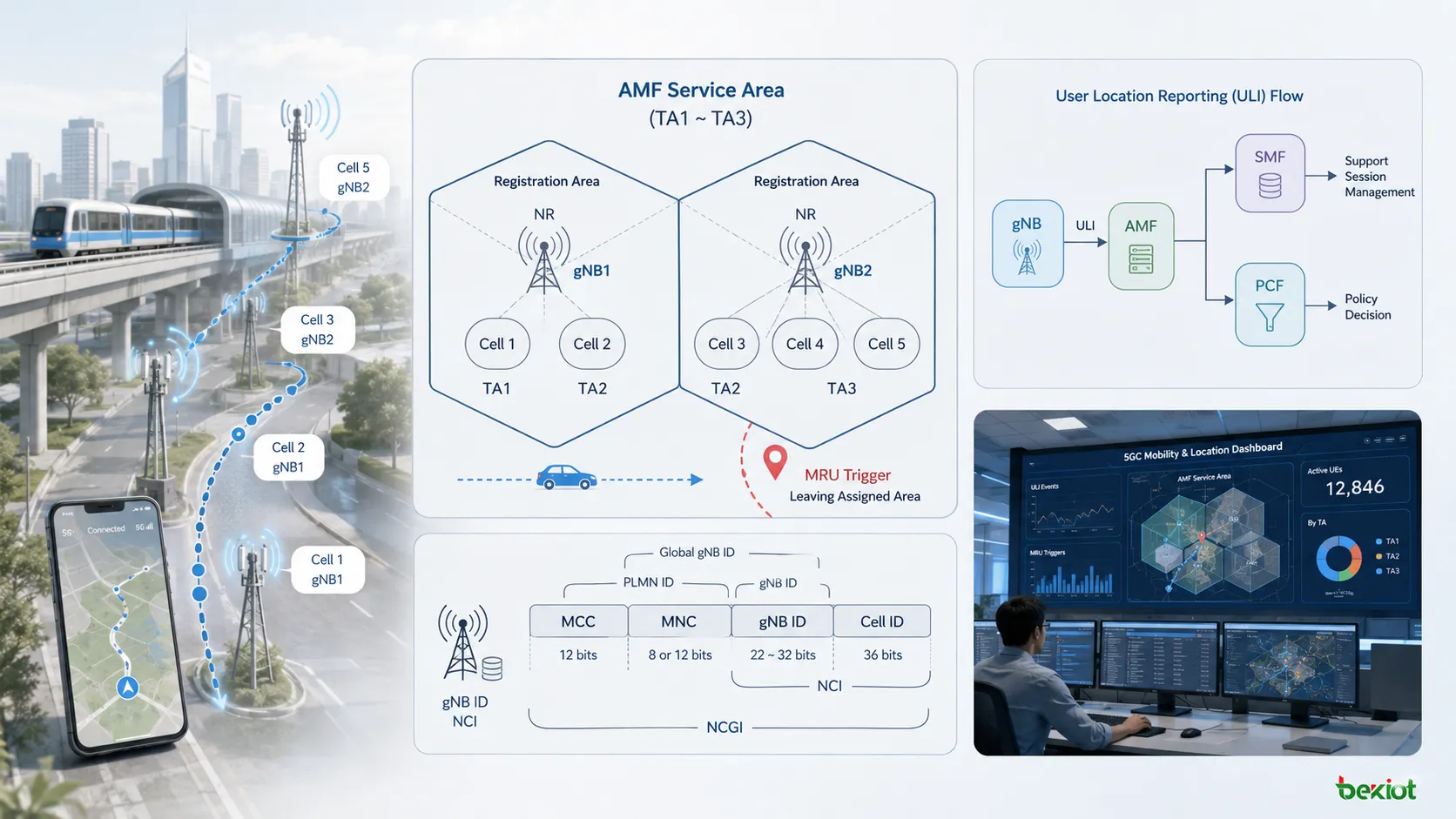
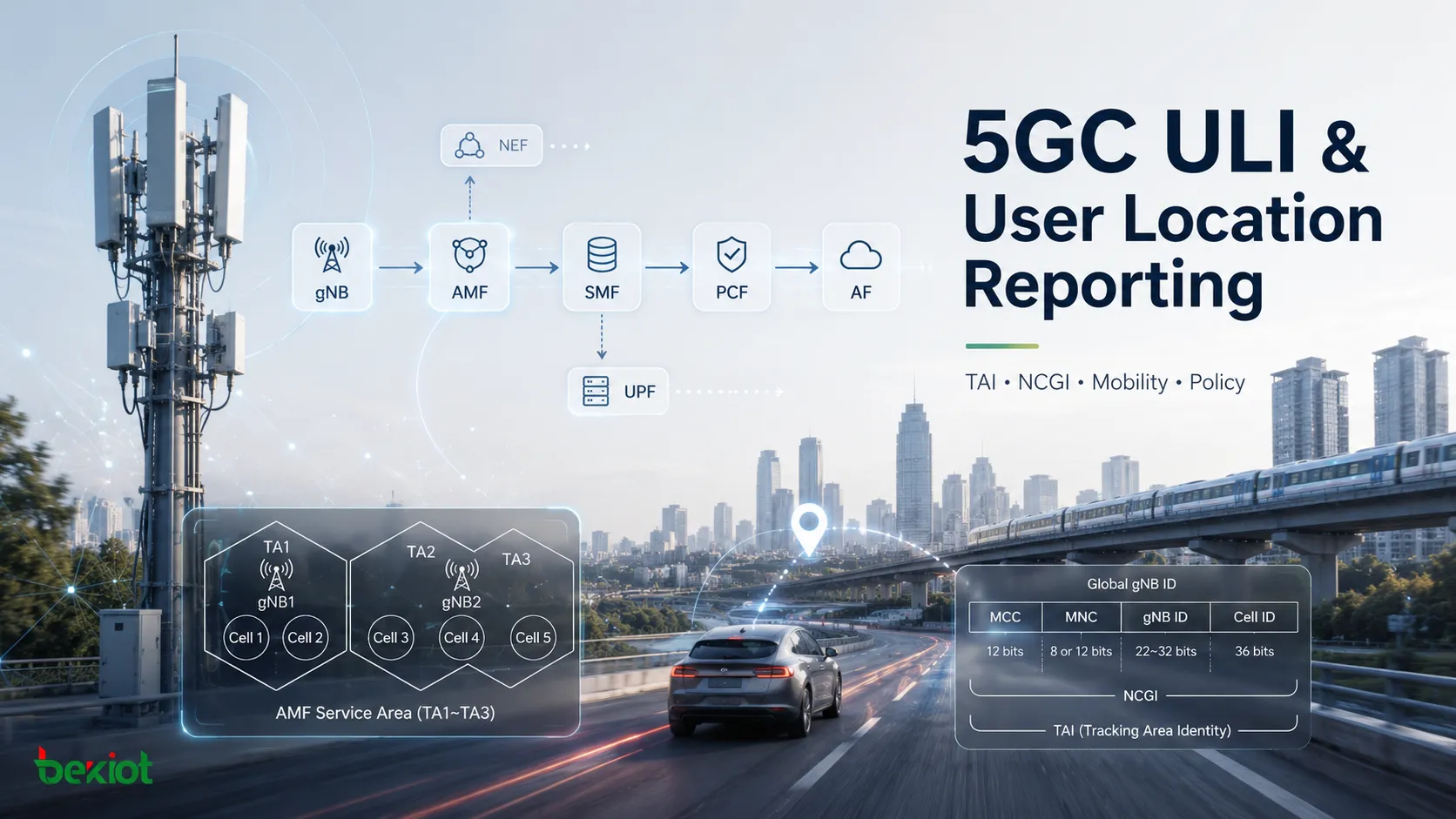
TA、gNB、NRセル、AMFサービスエリアの関係とUEが割り当てエリア外へ移動した際のMRU発生を示す5GC登録エリア図
Registration Area設計はTA、gNB、セルの関係を結び付け、UEが割り当てられたモビリティエリアの外へ移動した場合にだけMRUを発生させます。

位置データの送信先

AMFがgNBからULIを受信すると、その位置情報は複数の5Gコア機能で利用できます。AMFは報告された位置を最初に受け取るコア機能です。その後、ネットワーク設計に応じて、位置関連情報をセッション管理のためSMFへ、ポリシー判断のためPCFへ、さらにアプリケーション向け機能へ共有できます。

代表的な信号経路はgNB → AMF → SMF → PCFと表せます。PCFは、IMS関連構成におけるP-CSCFなど、事業者が所有するアプリケーション機能に対してポリシー処理を提供できます。別の経路では、公開ルールとサービス権限に従い、NEFを通じて第三者アプリケーション機能へ情報を公開できます。

ULI関連情報は、ユーザープレーンに関係するサービス公開にも使われることがあります。たとえばSMFはUPFと連携でき、特定のサービス設計ではUPFが第三者アプリケーション向けにHTTPヘッダー拡張を行うことがあります。これは、すべてのアプリケーションが自動的に完全な位置データを受け取るという意味ではありません。5Gアーキテクチャには、ネットワーク側のユーザー位置情報をポリシー、セッション、アプリケーション機能で利用するための経路が定義されているという意味です。

技術的な理解とSEO上の要点は明確です。ULIはgNBから始まり、AMFを通じてコアへ入り、その後モビリティ、セッション、ポリシー、サービス公開のロジックに影響します。TAIはトラッキングエリアの位置を示し、NCGIはNRセル識別を示し、Registration AreaのロジックはUEがMRUで移動変化を報告すべき時点を決めます。

よくある質問

なぜAMFはUEの無線位置を直接把握できないのですか?

AMFはコアネットワーク機能です。サービングセルと無線側の位置はアクセスネットワークが観測するため、AMFはgNBがNGAPで報告する情報に依存します。

Initial UE MessageとUplink NAS Transportが重要なのはなぜですか?

これらはUE側からAMFへNAS信号を運ぶため、N2メッセージ内のULIにより、AMFはNAS手順とUEの現在位置情報を関連付けられます。

gNB IDの長さが変わるとどうなりますか?

NCIは常に36ビットです。そのためgNB IDが長くなるとCell IDに使えるビットが減り、gNB IDが短くなるとCell IDに使えるビットが増えます。

1つのgNBを複数のトラッキングエリアに含められますか?

1つのgNBに属する異なるセルを、別々のトラッキングエリアへ割り当てることができます。各セルは1つのTAにのみ属するため、計画上の基本単位はセルです。

MRUが日常的なモビリティで重要なのはなぜですか?

UEが割り当てエリア外へ移動したとき、MRUはRegistration Area情報を更新します。これによりネットワークは、エリア内で過剰な更新を発生させずにUEの到達性を維持できます。

おすすめ商品
カタログ
顧客サービス 電話
We use cookie to improve your online experience. By continuing to browse this website, you agree to our use of cookie.

Cookies

This Cookie Policy explains how we use cookies and similar technologies when you access or use our website and related services. Please read this Policy together with our Terms and Conditions and Privacy Policy so that you understand how we collect, use, and protect information.

By continuing to access or use our Services, you acknowledge that cookies and similar technologies may be used as described in this Policy, subject to applicable law and your available choices.

Updates to This Cookie Policy

We may revise this Cookie Policy from time to time to reflect changes in legal requirements, technology, or our business practices. When we make updates, the revised version will be posted on this page and will become effective from the date of publication unless otherwise required by law.

Where required, we will provide additional notice or request your consent before applying material changes that affect your rights or choices.

What Are Cookies?

Cookies are small text files placed on your device when you visit a website or interact with certain online content. They help websites recognize your browser or device, remember your preferences, support essential functionality, and improve the overall user experience.

In this Cookie Policy, the term “cookies” also includes similar technologies such as pixels, tags, web beacons, and other tracking tools that perform comparable functions.

Why We Use Cookies

We use cookies to help our website function properly, remember user preferences, enhance website performance, understand how visitors interact with our pages, and support security, analytics, and marketing activities where permitted by law.

We use cookies to keep our website functional, secure, efficient, and more relevant to your browsing experience.

Categories of Cookies We Use

Strictly Necessary Cookies

These cookies are essential for the operation of the website and cannot be disabled in our systems where they are required to provide the service you request. They are typically set in response to actions such as setting privacy preferences, signing in, or submitting forms.

Without these cookies, certain parts of the website may not function correctly.

Functional Cookies

Functional cookies enable enhanced features and personalization, such as remembering your preferences, language settings, or previously selected options. These cookies may be set by us or by third-party providers whose services are integrated into our website.

If you disable these cookies, some services or features may not work as intended.

Performance and Analytics Cookies

These cookies help us understand how visitors use our website by collecting information such as traffic sources, page visits, navigation behavior, and general interaction patterns. In many cases, this information is aggregated and does not directly identify individual users.

We use this information to improve website performance, usability, and content relevance.

Targeting and Advertising Cookies

These cookies may be placed by our advertising or marketing partners to help deliver more relevant ads and measure the effectiveness of campaigns. They may use information about your browsing activity across different websites and services to build a profile of your interests.

These cookies generally do not store directly identifying personal information, but they may identify your browser or device.

First-Party and Third-Party Cookies

Some cookies are set directly by our website and are referred to as first-party cookies. Other cookies are set by third-party services, such as analytics providers, embedded content providers, or advertising partners, and are referred to as third-party cookies.

Third-party providers may use their own cookies in accordance with their own privacy and cookie policies.

Information Collected Through Cookies

Depending on the type of cookie used, the information collected may include browser type, device type, IP address, referring website, pages viewed, time spent on pages, clickstream behavior, and general usage patterns.

This information helps us maintain the website, improve performance, enhance security, and provide a better user experience.

Your Cookie Choices

You can control or disable cookies through your browser settings and, where available, through our cookie consent or preference management tools. Depending on your location, you may also have the right to accept or reject certain categories of cookies, especially those used for analytics, personalization, or advertising purposes.

Please note that blocking or deleting certain cookies may affect the availability, functionality, or performance of some parts of the website.

Restricting cookies may limit certain features and reduce the quality of your experience on the website.

Cookies in Mobile Applications

Where our mobile applications use cookie-like technologies, they are generally limited to those required for core functionality, security, and service delivery. Disabling these essential technologies may affect the normal operation of the application.

We do not use essential mobile application cookies to store unnecessary personal information.

How to Manage Cookies

Most web browsers allow you to manage cookies through browser settings. You can usually choose to block, delete, or receive alerts before cookies are stored. Because browser controls vary, please refer to your browser provider’s support documentation for details on how to manage cookie settings.

Contact Us

If you have any questions about this Cookie Policy or our use of cookies and similar technologies, please contact us at support@becke.cc .