

百科事典
2026-07-29 17:45:24
5GC QoS アーキテクチャ:QoS Flow が 5G サービス体験を制御する仕組み
QoS Flow の粒度、SDF マッピング、QFI、GBR/Non-GBR 処理、5QI、ARP、AMBR 制限、QoS ルール、PDR、Reflective QoS を通じて、5G サービス提供における 5GC QoS を解説します。

ベッケテレコム

5GC QoS アーキテクチャ:QoS Flow が 5G サービス体験を制御する仕組み

5G ネットワークにおいて、QoS はパケットに付けられる単なる技術ラベルではありません。どのトラフィックを通常のベストエフォートとして扱うか、どのサービスに保証リソースを割り当てるか、さらに無線状態や輻輳がユーザー体験に影響し始めたときにネットワークがどう反応するかを決める仕組みです。通信事業者にとって QoS は帯域コストとネットワークリソース配分に密接に関係し、ユーザーやサービスパートナーにとっては、サービス品質、契約レベル、業務優先度、保証された体験として現れます。

携帯電話は、メッセージ、短編動画、クラウド授業、ゲーム、IMS シグナリング、VoNR 音声、ライブ動画、AR/VR インタラクション、バックグラウンド更新など、多くの種類のトラフィックを同時に生成します。これらのフローの要件は同じではありません。バッファリング可能な動画は音声より大きな遅延を許容できます。IMS シグナリングには信頼性の高い処理が必要ですが、動画と同じ帯域は必要ありません。遅延が重要な産業サービスでは、一般的なソーシャルアプリよりはるかに厳しい遅延およびパケット損失制御が必要になる場合があります。

5GC QoS の役割は、これらのサービスデータフローを分類し、適切な QoS Flow にマッピングし、転送処理を割り当て、UE、gNB、UPF、SMF およびポリシールールを連携させることで、ユーザープレーンをサービス意図に沿って動作させることです。
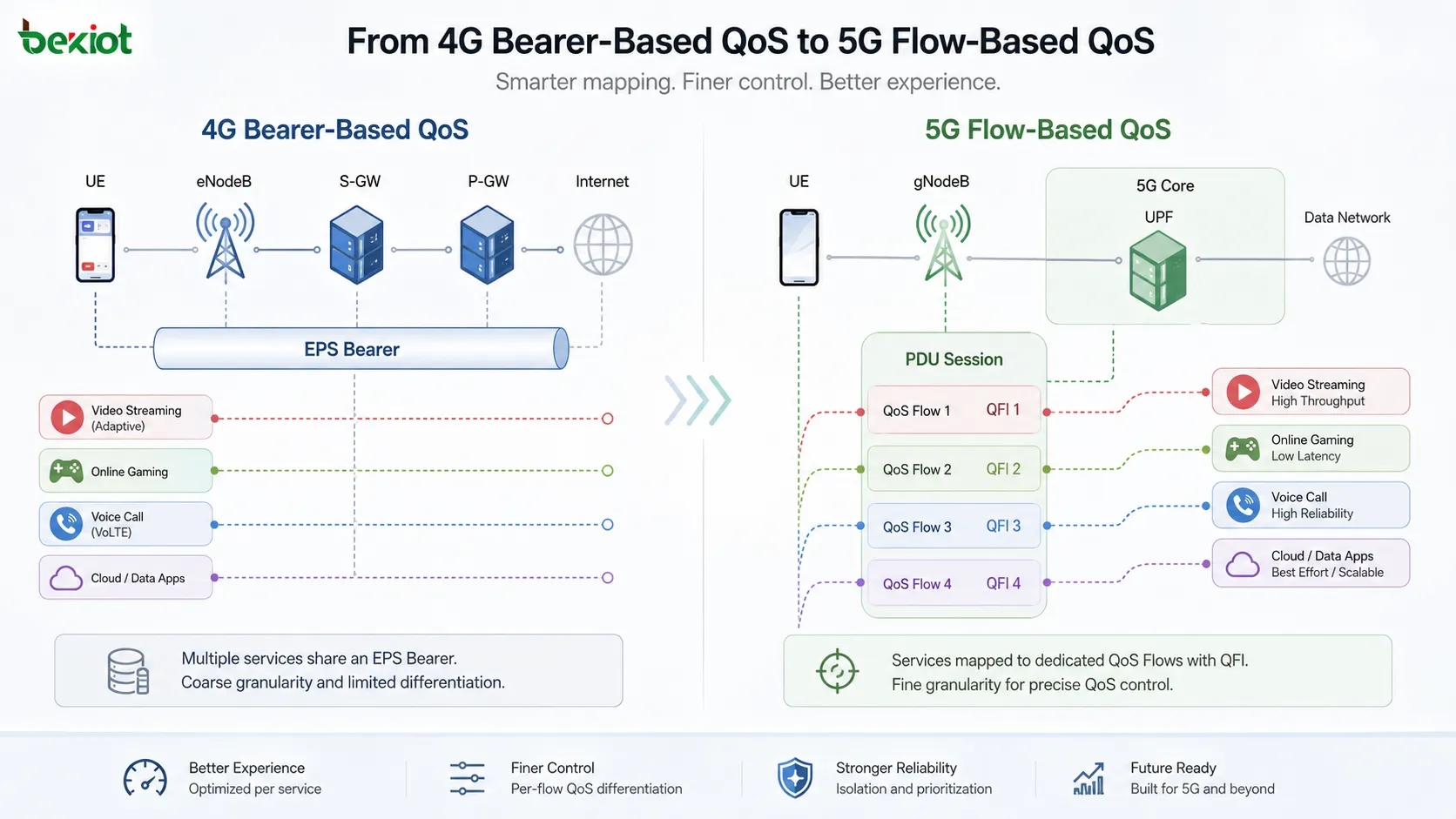
SDF トラフィックを QFI 付き QoS Flow にマッピングし、PDU セッション、DRB、N3 トンネル、UE、gNodeB、UPF を示す 5GC QoS アーキテクチャ
5GC は QoS Flow を主要なサービス粒度として使用し、同一 PDU セッション内の異なるアプリケーショントラフィックに異なる転送処理を適用します。

サービス価値とリソースコスト

QoS は、すべてのサービスが同じネットワーク保証を受けるわけではないという単純な現実から始まります。ソーシャルメッセージ、短編動画、一般的なブラウジング、音楽アプリ、オンライン学習など、多くの公開インターネットアプリケーションは通常、ベストエフォートで扱われます。一般に Non-GBR サービスとして処理され、ネットワークは各フローに保証ビットレートを約束しません。

ユーザー、企業顧客、またはサービスパートナーが差別化処理に対価を支払うことで、より強い QoS 保護を受けるサービスもあります。オンラインゲーム連携、プレミアム企業アプリケーション、AR/VR サービス、業界向け低遅延サービスなどは、より制御された QoS で処理できます。ネットワークが最低レートを予約または保護する必要がある場合、これらのサービスは GBR、すなわち 保証ビットレート を利用できます。

ユーザーが個別に料金を支払わなくても、QoS 保護を受ける通信事業者保有サービスもあります。音声サービスが代表例です。4G では VoLTE を通じて語られることが多く、5G では同じ考え方が VoNR 関連トラフィックに現れます。音声は安定性、低遅延、明瞭性を維持する必要があるため、常に一般的なベストエフォートアプリケーションとして扱うことはできません。

ベアラからフローへ

4G と 5G の QoS における重要な違いの一つは、ベアラ中心の考え方からフロー中心の考え方への移行です。4G では QoS は EPS Bearer を中心に構成され、ベアラ関係は無線ベアラ、S1-U トンネル、S5/S8 トンネルリソースに関連付けられていました。ベアラが増えるほど、対応するトンネルや無線ベアラ構造も増えるのが一般的でした。

5G では主要な QoS 単位は QoS Flow です。1 つの PDU セッションは 1 つ以上の QoS Flow を収容できます。QoS Flow は 0~63 の値を取る QFI、すなわち QoS フロー識別子 によって識別されます。同じ QFI を持つパケットは同じ転送処理を受けます。これにより 5G は、従来の EPS Bearer 方式より細かく柔軟なサービス分類モデルを実現します。

1 つの PDU セッションで複数の QoS Flow を運べますが、その PDU セッションの N3 トンネルは 1 本のままです。1 つの DRB は 1 つ以上の QoS Flow を収容でき、QoS Flow と DRB の実際のマッピングは gNB が制御します。そのため DRB 数と QFI 数が同じである必要はありません。例えば、Non-GBR アプリフローと GBR ゲームフローが 1 つの DRB を共有する設計もあれば、無線戦略に応じて別々にマッピングする設計もあります。

主要パラメータが処理を決める

5GC QoS パラメータは、各フローをどのように処理するかを示します。QoS Flow レベルの代表的なパラメータには 5QIARP があります。5QI は 5G QoS 識別子で、4G の QCI 概念から発展したものです。優先度、パケット遅延予算、パケット誤り率、平均化ウィンドウ、遅延クリティカル GBR サービス向け最大データバースト量などのサービス特性を表します。

ARP は割当・保持優先度を意味します。リソースが限られる状況で、QoS Flow を確立または維持できるかを判断するために使われます。輻輳時には、どのフローを受け入れるか、どのフローを解放または拒否しやすいかに ARP が影響します。

GBR フローにはレート関連パラメータがあります。GFBR は保証フロービットレート、すなわちネットワークが保護しようとする最低レートを定義します。MFBR は最大フロービットレートを定義し、この値を超えるトラフィックは破棄される場合があります。無線状態が悪いなど、RAN 側が GFBR を満たせない場合には通知制御を利用できます。最大パケット損失率は、上りまたは下りトラフィックで許容される損失水準を定義します。

Non-GBR トラフィックは別の方法で制御されます。UE-AMBR は UE に属するすべての Non-GBR QoS Flow の集約ビットレートを制限し、Session-AMBR は 1 つの PDU セッション内にあるすべての Non-GBR QoS Flow を制限します。RQA、すなわち反射型 QoS 属性は、そのフローに Reflective QoS を適用できるかを示します。

トラフィックのマッピング方法

パケットを正しく分類しマッピングできなければ、QoS は機能しません。5G では上りと下りで分類方法が異なります。上りトラフィックでは、UE がネットワークから提供された、または UE 自身が導出した QoS ルールに基づいて分類とマッピングを行います。下りトラフィックでは、UPF が SMF から配信された PDR、すなわちパケット検出ルールに従って分類します。

QoS ルールまたは PDR にはパケットフィルター情報が含まれます。送信元または宛先 IP アドレス、IPv6 プレフィックス、送信元または宛先ポート、IP プロトコル番号、IPv6 Next Header タイプ、IPv4 ToS、IPv6 Traffic Class、IPv6 Flow Label、IPsec SPI、トラフィック方向などが含まれます。これらのフィルターによって、UE または UPF は各パケットがどの QoS Flow に属するかを判断します。

UPF が下りパケットを有効な PDR に一致させられない場合、そのパケットは破棄される可能性があります。下り QoS 処理は、SMF が UPF に設定したルールに依存するためです。上り方向では、UE が適用される QoS ルールに従ってパケットをマーキングし、正しい QoS Flow に配置した後、無線アクセスネットワークで処理します。

Reflective QoS は特定のケースでシグナリング負荷を削減します。ネットワークが Reflective QoS を有効にすると、UPF は RQI 表示を付けて下りデータを送信できます。UE は N3 トンネルと無線インターフェースを通じて下りパケットを受信し、そこから上り QoS ルールを導出します。この UE 導出 QoS ルールには上りパケットフィルター、QFI、優先度が含まれます。UE はネットワークから別個のルールが配信されるのを待たずに、以後の上りパケットを分類できます。
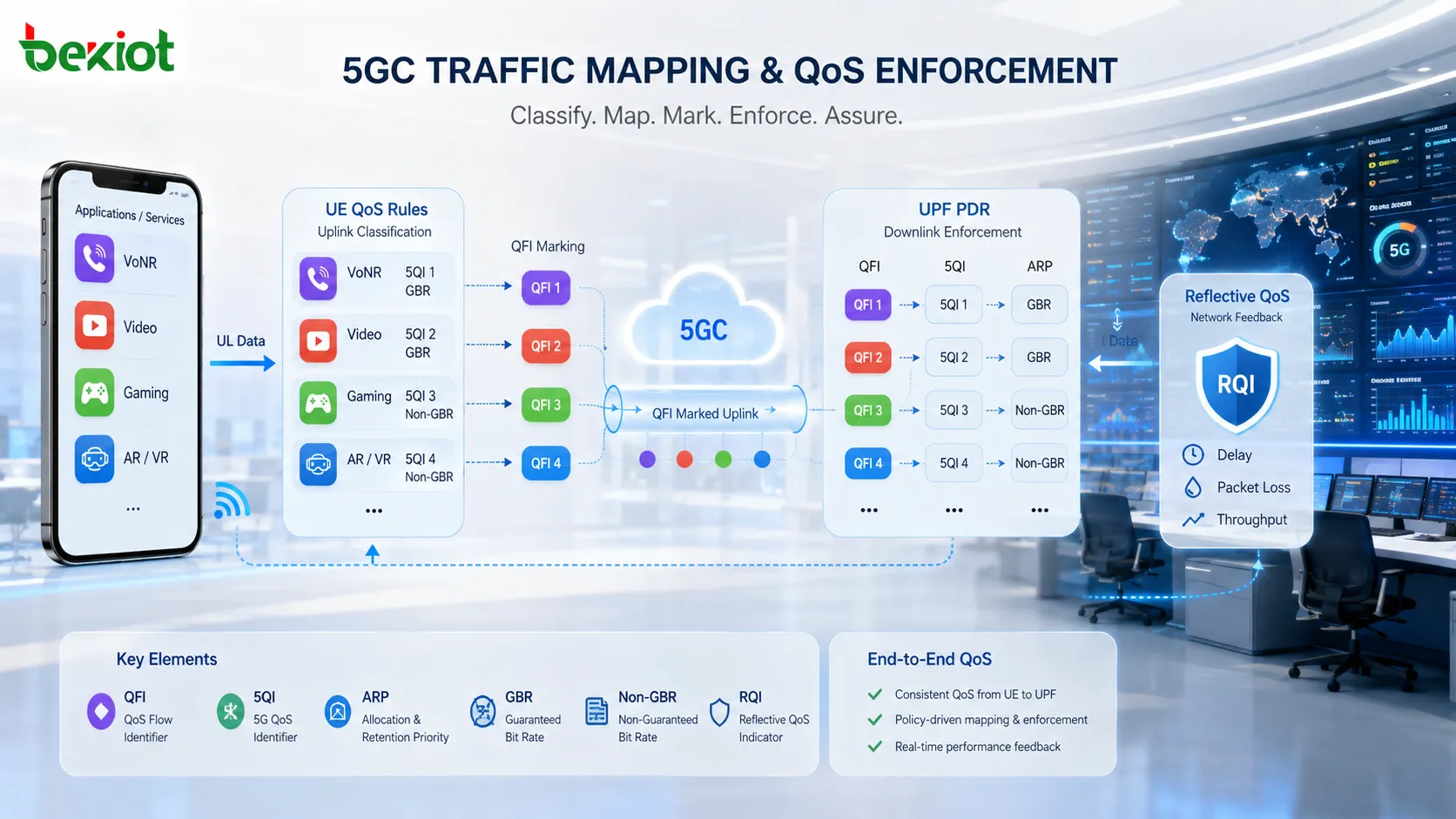
UE 側 UL QoS ルール、UPF 側 DL PDR、SMF によるルール配信、QFI マーキング、RQI 表示付き Reflective QoS を示す 5GC トラフィックマッピング図
上りパケットは UE 側の QoS ルールでマッピングされ、下りパケットは SMF が配信した UPF 側の PDR で分類されます。

よくある質問

5G が DRB だけでなく QoS Flow を使用するのはなぜですか?

QoS Flow はコアネットワークのサービス処理モデルに属し、DRB は無線ベアラ処理に属します。両者を分離することで、サービスルールを無線リソースへマッピングする際の柔軟性が高まります。

トラフィック要件が似た 2 つのアプリケーションが異なる QoS Flow を使用できますか?

はい。通信事業者は帯域や遅延の要件だけでなく、サービスの所有関係、商用契約、契約ポリシー、課金モデルも考慮できます。

トラフィックが MFBR を超えるとどうなりますか?

MFBR はその GBR QoS Flow に許可される上限レートを定義するため、最大フロービットレートを超えるトラフィックは破棄される場合があります。

サービス設計で 5QI が重要なのはなぜですか?

5QI はサービスカテゴリを優先度、遅延、パケット誤り、リソースタイプの期待値に関連付ける標準化された方法を提供し、QoS 動作の設計と比較を容易にします。

Reflective QoS はすべての端末で動作しますか?

いいえ。UE の対応とネットワーク側での適切な有効化が必要です。端末が対応していない場合、UE は下りユーザープレーンデータから上り QoS ルールを導出できません。

おすすめ商品
カタログ
顧客サービス 電話
We use cookie to improve your online experience. By continuing to browse this website, you agree to our use of cookie.

Cookies

This Cookie Policy explains how we use cookies and similar technologies when you access or use our website and related services. Please read this Policy together with our Terms and Conditions and Privacy Policy so that you understand how we collect, use, and protect information.

By continuing to access or use our Services, you acknowledge that cookies and similar technologies may be used as described in this Policy, subject to applicable law and your available choices.

Updates to This Cookie Policy

We may revise this Cookie Policy from time to time to reflect changes in legal requirements, technology, or our business practices. When we make updates, the revised version will be posted on this page and will become effective from the date of publication unless otherwise required by law.

Where required, we will provide additional notice or request your consent before applying material changes that affect your rights or choices.

What Are Cookies?

Cookies are small text files placed on your device when you visit a website or interact with certain online content. They help websites recognize your browser or device, remember your preferences, support essential functionality, and improve the overall user experience.

In this Cookie Policy, the term “cookies” also includes similar technologies such as pixels, tags, web beacons, and other tracking tools that perform comparable functions.

Why We Use Cookies

We use cookies to help our website function properly, remember user preferences, enhance website performance, understand how visitors interact with our pages, and support security, analytics, and marketing activities where permitted by law.

We use cookies to keep our website functional, secure, efficient, and more relevant to your browsing experience.

Categories of Cookies We Use

Strictly Necessary Cookies

These cookies are essential for the operation of the website and cannot be disabled in our systems where they are required to provide the service you request. They are typically set in response to actions such as setting privacy preferences, signing in, or submitting forms.

Without these cookies, certain parts of the website may not function correctly.

Functional Cookies

Functional cookies enable enhanced features and personalization, such as remembering your preferences, language settings, or previously selected options. These cookies may be set by us or by third-party providers whose services are integrated into our website.

If you disable these cookies, some services or features may not work as intended.

Performance and Analytics Cookies

These cookies help us understand how visitors use our website by collecting information such as traffic sources, page visits, navigation behavior, and general interaction patterns. In many cases, this information is aggregated and does not directly identify individual users.

We use this information to improve website performance, usability, and content relevance.

Targeting and Advertising Cookies

These cookies may be placed by our advertising or marketing partners to help deliver more relevant ads and measure the effectiveness of campaigns. They may use information about your browsing activity across different websites and services to build a profile of your interests.

These cookies generally do not store directly identifying personal information, but they may identify your browser or device.

First-Party and Third-Party Cookies

Some cookies are set directly by our website and are referred to as first-party cookies. Other cookies are set by third-party services, such as analytics providers, embedded content providers, or advertising partners, and are referred to as third-party cookies.

Third-party providers may use their own cookies in accordance with their own privacy and cookie policies.

Information Collected Through Cookies

Depending on the type of cookie used, the information collected may include browser type, device type, IP address, referring website, pages viewed, time spent on pages, clickstream behavior, and general usage patterns.

This information helps us maintain the website, improve performance, enhance security, and provide a better user experience.

Your Cookie Choices

You can control or disable cookies through your browser settings and, where available, through our cookie consent or preference management tools. Depending on your location, you may also have the right to accept or reject certain categories of cookies, especially those used for analytics, personalization, or advertising purposes.

Please note that blocking or deleting certain cookies may affect the availability, functionality, or performance of some parts of the website.

Restricting cookies may limit certain features and reduce the quality of your experience on the website.

Cookies in Mobile Applications

Where our mobile applications use cookie-like technologies, they are generally limited to those required for core functionality, security, and service delivery. Disabling these essential technologies may affect the normal operation of the application.

We do not use essential mobile application cookies to store unnecessary personal information.

How to Manage Cookies

Most web browsers allow you to manage cookies through browser settings. You can usually choose to block, delete, or receive alerts before cookies are stored. Because browser controls vary, please refer to your browser provider’s support documentation for details on how to manage cookie settings.

Contact Us

If you have any questions about this Cookie Policy or our use of cookies and similar technologies, please contact us at support@becke.cc .