
IndustryInsightsについて
2026-09-16 18:06:18

5GCのUE起動登録解除手順

5GCのUE起動登録解除では、要求の対象範囲、条件付きのSMF/UPF・ポリシー解放、通常の登録解除と電源オフ、T3521、および解放または保持されたコンテキストの信号確認が関係します。

ベッケテレコム

5GCのUE起動登録解除手順

RRC Releaseだけでは、UEの登録解除が完了したとは判断できません。登録済みのUEがアクセス信号接続を解放しても、AMFは登録コンテキストを、SMFはPDUセッションを保持できます。一方、UE起動の登録解除はNASのDeregistration Requestで始まり、指定されたアクセスの登録を終了します。

トレースを解析する際は、要求の対象範囲、必要なセッションとポリシーの解放、想定されるNAS応答を順に追います。AMF、SMF、UPF、PCF、UDMはそれぞれ異なる状態を保持しており、すべてのUEレコードを同時に削除するわけではありません。

最初に登録解除の対象範囲を確認する

UEは5G-GUTIを使用してAMFにDeregistration Requestを送信します。Deregistration typeとその中のSwitch offの指定、およびAccess Typeを確認してください。対象は3GPPアクセス、非3GPPアクセス、または両アクセスを同じAMFが提供する場合の両方です。要求を運ぶアクセスと、登録解除の対象アクセスは一致するとは限りません。

NAS符号化では、アクセスタイプは登録解除タイプ情報要素の一部であり、下図の例示的なIEIを持つ独立フィールドではありません。識別情報と完全性保護は実際のNASコンテキストに照らして確認する必要があります。保護されていない要求や検証できない要求では、解放前にセキュリティ処理が必要になる場合があります。
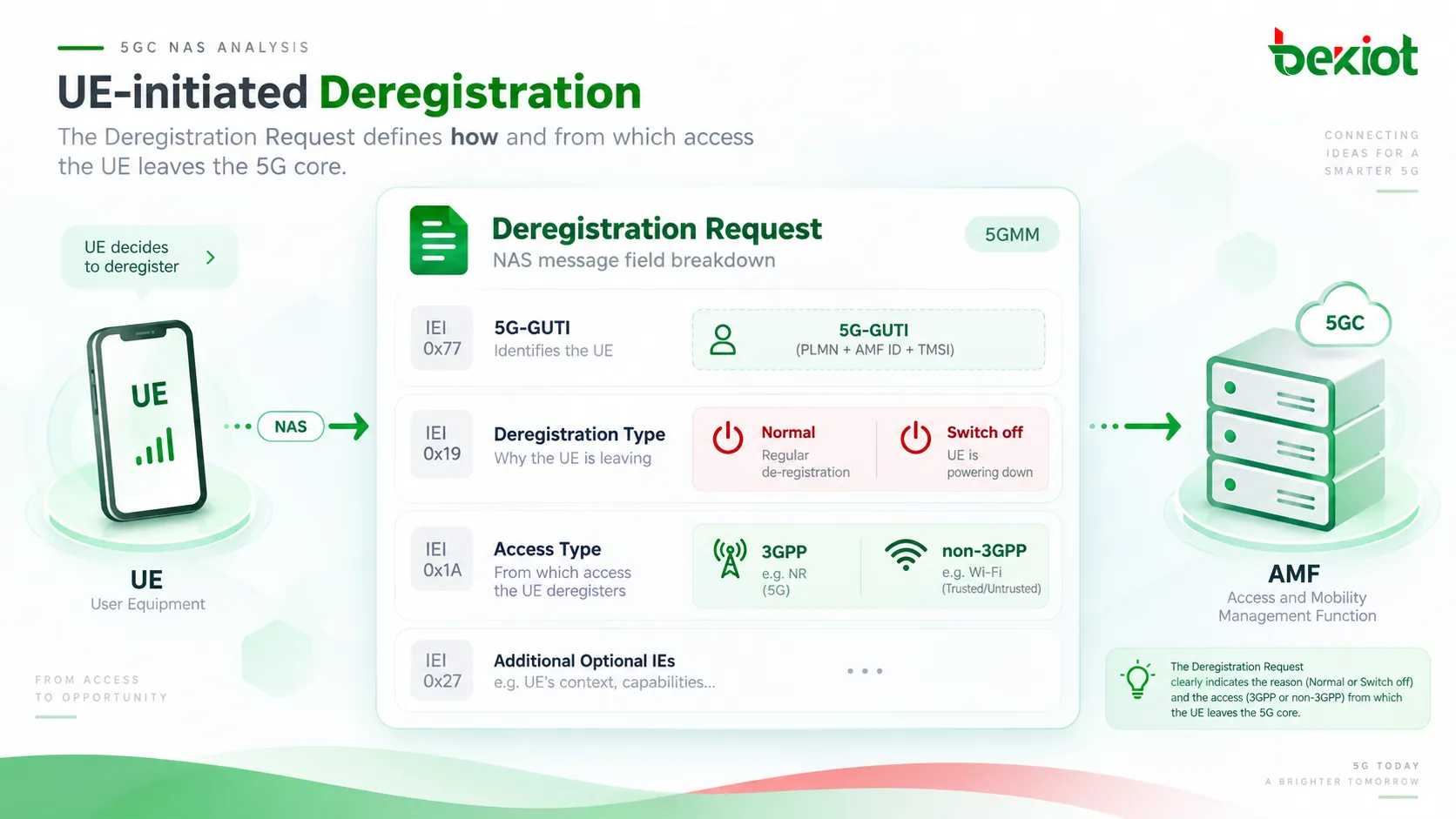
UEがAMFにDeregistration Requestを送信する図。識別情報、登録解除タイプ、アクセスの対象範囲を強調している。
UEがAMFにDeregistration Requestを送信する図。識別情報、登録解除タイプ、アクセスの対象範囲を強調している

対象アクセスに属するPDUセッションを解放する

対象アクセスにPDUセッションがなければ、セッション解放の手順は省略されます。存在する場合、AMFは対象セッションごとに関連するSMFへNsmf_PDUSession_ReleaseSMContextを送ります。単独のPDUセッション解放ではデータセッションを削除しても登録を維持できますが、登録解除はより広い範囲を対象とします。両アクセスにユーザープレーンリソースを持つマルチアクセス(MA)PDUセッションでは、一方のアクセスの登録解除で解放されるのはそのアクセスのユーザープレーンリソースだけであり、セッションは他方のアクセスで維持できます。

SMFはIPアドレスやプレフィックスなど、セッションに割り当てたリソースを解放し、該当するUPFにN4セッション解放を要求します。N4ではPFCP Session Deletion RequestとPFCP Session Deletion Responseが削除のやり取りに相当します。削除に成功すると、そのPFCPセッションと関連ルール(該当するPDR、FAR、QER、URRを含む)が削除され、関連トンネルリソースも解放されます。

SMFはSMコンテキスト解放応答を返します。ホームルーティングのローミングでは、V-SMFとH-SMFの連携も必要です。参照フローの順序には条件があります。セカンダリRATの使用量報告が必要な場合、AMFは先にNASの受諾通知とアクセス解放を実行し、使用量データを取得してからセッションとポリシーの解放を続けます。
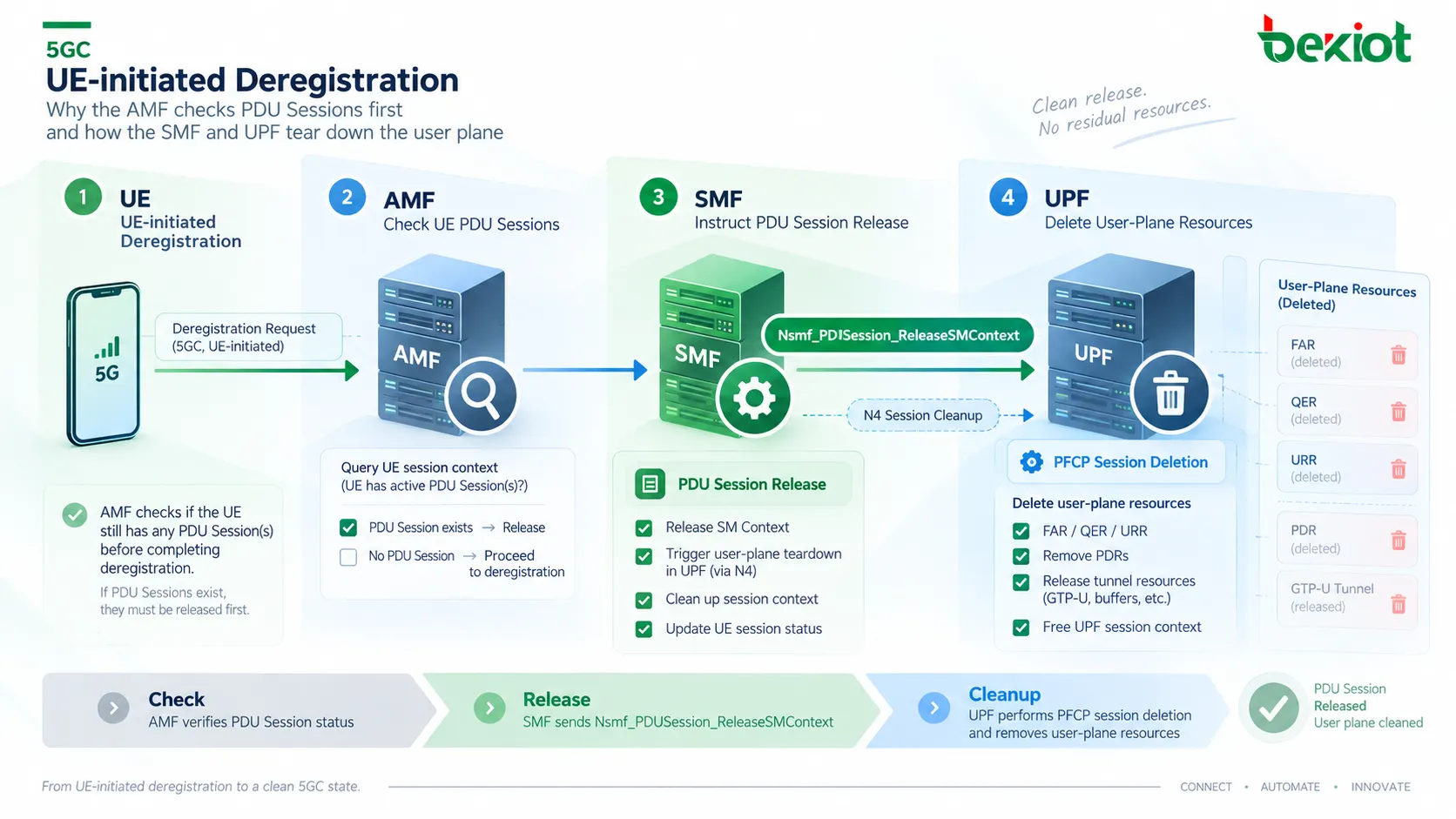
登録解除とユーザープレーンリソース解放におけるUE、AMF、SMF、UPFの役割を示す図。
登録解除とユーザープレーンリソース解放におけるUE、AMF、SMF、UPFの役割を示す図

不要になったポリシーとUDMの関連付けを条件に応じて削除する

動的PCCが適用される場合、SMFは必要に応じてNpcf_SMPolicyControl_Deleteを使用し、SM Policy Associationを終了します。そのUEと関連するDNNおよびS-NSSAIについてSMFが扱う最後のPDUセッションであれば、Nudm_SDM_UnsubscribeとNudm_UECM_Deregistrationを使用して、UDM内の該当する購読とSMF登録の関連付けを削除します。

UEがどのアクセスにも登録されていなくなった場合、AMFは既存のAM Policy AssociationとUE Policy Associationを終了します。加入者プロファイル、過去の課金データ、UDM内のすべてのレコードを消去する必要があるとは判断しないでください。別の登録済みアクセスやセッションがコンテキストを必要としている可能性があるため、具体的な関連付けと対象範囲を確認します。
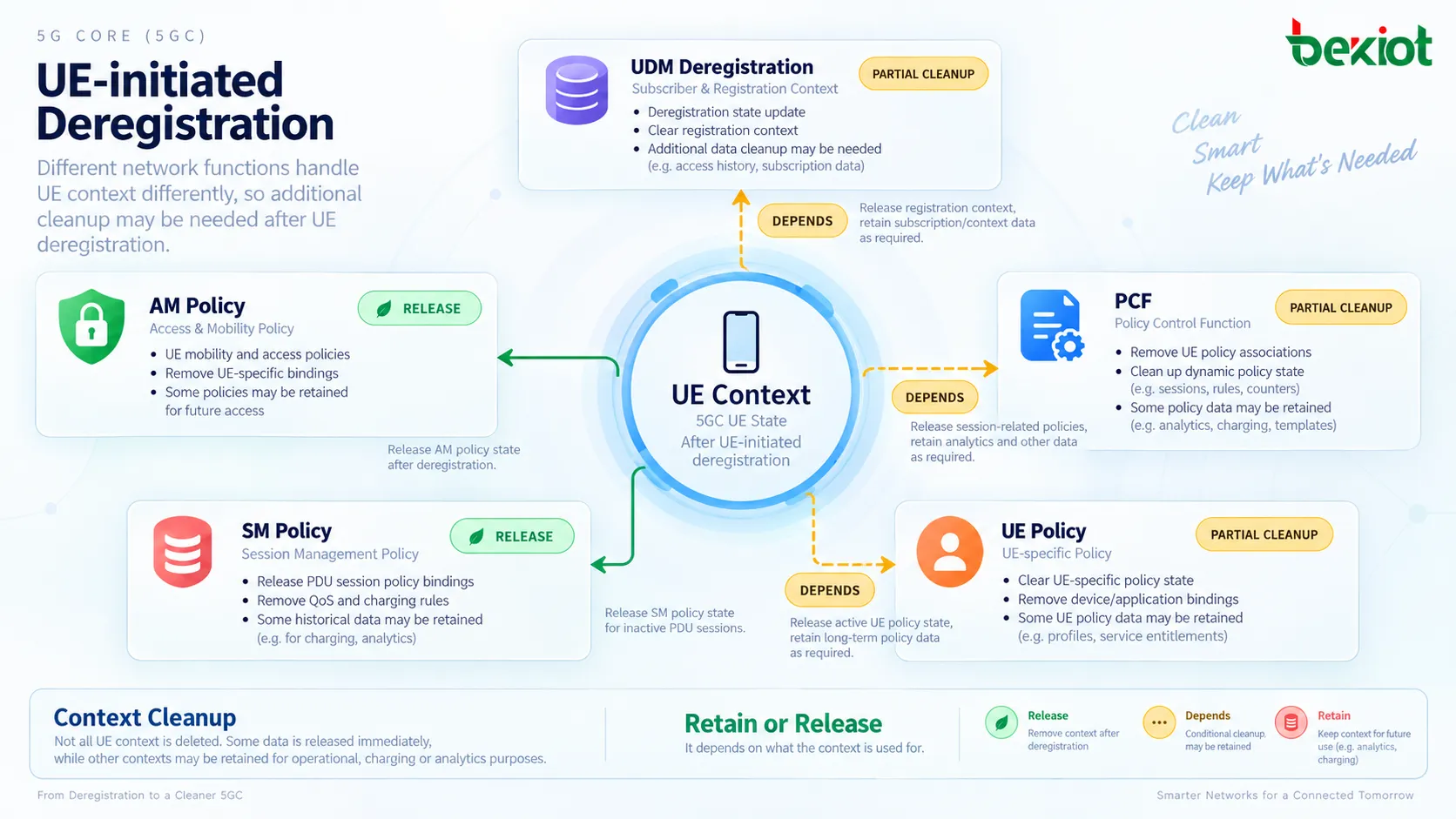
UEコンテキストを中心にAMポリシー、SMポリシー、UEポリシー、PCF、UDMの解放をまとめた図。
UEコンテキストを中心にAMポリシー、SMポリシー、UEポリシー、PCF、UDMの解放をまとめた図

通常の登録解除と電源オフでは終了処理が異なる

Normal de-registrationではUEがDeregistration Acceptを待ち、T3521で応答を監視します。タイマーが満了した場合は、仕様で定められた再試行と失敗処理に従います。またAMFは、該当するN2信号接続が存在すれば、NG-RANまたは該当する非3GPPアクセスゲートウェイとの接続を解放します。

Switch offの場合、AMFはDeregistration Acceptを送信しません。UEは電源を切る前にこの確認を待ちません。この場合の応答の不在は想定どおりの動作であり、それだけで登録解除の失敗を示すものではありません。

突然の電源断や圏外への移行では、要求がAMFに届かないことがあります。この異常な消失は、ネットワークの到達性監視と、その条件を満たした場合の暗黙的登録解除で処理されます。これは、電源オフ要求を正常に受信した場合とは異なります。

トレース解析の実用チェックリスト

  1. UEからAMFへの方向、5G-GUTI、完全性検証結果、登録解除タイプ、対象アクセスを確認します。

  2. 解放メッセージを探す前に、対象のPDUセッションとN4コンテキストが存在していたかを確認します。

  3. UEとセッションの識別情報により、AMFからSMF、SMFからUPF、ポリシー/UDMのトランザクションを照合し、応答と保持された状態を確認します。

  4. NASの受諾応答は、該当する電源オフ以外のケースでのみ想定し、アクセス解放と使用量報告による条件付きの順序を考慮します。

よくある質問

電源オフ要求の到達は保証されますか?

いいえ。突然の電源断や無線カバレッジの喪失により、送達できない場合があります。要求が見当たらなくても、AMFが登録状態をすでに削除したとは判断できません。

すべての登録解除にPFCP削除が含まれますか?

いいえ。関連する確立済みPDUセッションやN4コンテキストがなければ、対応する削除対象もありません。PFCPメッセージがないことを障害と判断する前に、以前のセッション状態を調べてください。

別のアクセスは登録されたままにできますか?

はい。登録解除は一方のアクセスだけを対象にできます。AM Policy AssociationやUE Policy Associationの終了、または全セッション状態の削除を想定する前に、指定された対象範囲を確認します。

ネットワーク起動の登録解除とは何が違いますか?

NAS要求はAMFからUEに送られますが、暗黙的登録解除では要求がありません。一部の内部解放手順は共通でも、開始条件と想定応答は異なります。

関連手順と標準仕様

開始方向が反対の手順は、ネットワーク起動の登録解除を参照してください。暗黙的な解放に至る前のアイドル時の到達性については、定期登録更新を参照してください。

上記手順は3GPP TS 23.502の4.2.2.3.2節、3GPP TS 24.501の5.5.2.2節とタイマー表に記載されたNAS動作、および3GPP TS 29.244の6.3.4節に記載されたPFCP削除に基づきます。解析する導入環境に合わせてリリースと対応機能を確認してください。

おすすめ商品
カタログ
顧客サービス 電話
We use cookie to improve your online experience. By continuing to browse this website, you agree to our use of cookie.

Cookies

This Cookie Policy explains how we use cookies and similar technologies when you access or use our website and related services. Please read this Policy together with our Terms and Conditions and Privacy Policy so that you understand how we collect, use, and protect information.

By continuing to access or use our Services, you acknowledge that cookies and similar technologies may be used as described in this Policy, subject to applicable law and your available choices.

Updates to This Cookie Policy

We may revise this Cookie Policy from time to time to reflect changes in legal requirements, technology, or our business practices. When we make updates, the revised version will be posted on this page and will become effective from the date of publication unless otherwise required by law.

Where required, we will provide additional notice or request your consent before applying material changes that affect your rights or choices.

What Are Cookies?

Cookies are small text files placed on your device when you visit a website or interact with certain online content. They help websites recognize your browser or device, remember your preferences, support essential functionality, and improve the overall user experience.

In this Cookie Policy, the term “cookies” also includes similar technologies such as pixels, tags, web beacons, and other tracking tools that perform comparable functions.

Why We Use Cookies

We use cookies to help our website function properly, remember user preferences, enhance website performance, understand how visitors interact with our pages, and support security, analytics, and marketing activities where permitted by law.

We use cookies to keep our website functional, secure, efficient, and more relevant to your browsing experience.

Categories of Cookies We Use

Strictly Necessary Cookies

These cookies are essential for the operation of the website and cannot be disabled in our systems where they are required to provide the service you request. They are typically set in response to actions such as setting privacy preferences, signing in, or submitting forms.

Without these cookies, certain parts of the website may not function correctly.

Functional Cookies

Functional cookies enable enhanced features and personalization, such as remembering your preferences, language settings, or previously selected options. These cookies may be set by us or by third-party providers whose services are integrated into our website.

If you disable these cookies, some services or features may not work as intended.

Performance and Analytics Cookies

These cookies help us understand how visitors use our website by collecting information such as traffic sources, page visits, navigation behavior, and general interaction patterns. In many cases, this information is aggregated and does not directly identify individual users.

We use this information to improve website performance, usability, and content relevance.

Targeting and Advertising Cookies

These cookies may be placed by our advertising or marketing partners to help deliver more relevant ads and measure the effectiveness of campaigns. They may use information about your browsing activity across different websites and services to build a profile of your interests.

These cookies generally do not store directly identifying personal information, but they may identify your browser or device.

First-Party and Third-Party Cookies

Some cookies are set directly by our website and are referred to as first-party cookies. Other cookies are set by third-party services, such as analytics providers, embedded content providers, or advertising partners, and are referred to as third-party cookies.

Third-party providers may use their own cookies in accordance with their own privacy and cookie policies.

Information Collected Through Cookies

Depending on the type of cookie used, the information collected may include browser type, device type, IP address, referring website, pages viewed, time spent on pages, clickstream behavior, and general usage patterns.

This information helps us maintain the website, improve performance, enhance security, and provide a better user experience.

Your Cookie Choices

You can control or disable cookies through your browser settings and, where available, through our cookie consent or preference management tools. Depending on your location, you may also have the right to accept or reject certain categories of cookies, especially those used for analytics, personalization, or advertising purposes.

Please note that blocking or deleting certain cookies may affect the availability, functionality, or performance of some parts of the website.

Restricting cookies may limit certain features and reduce the quality of your experience on the website.

Cookies in Mobile Applications

Where our mobile applications use cookie-like technologies, they are generally limited to those required for core functionality, security, and service delivery. Disabling these essential technologies may affect the normal operation of the application.

We do not use essential mobile application cookies to store unnecessary personal information.

How to Manage Cookies

Most web browsers allow you to manage cookies through browser settings. You can usually choose to block, delete, or receive alerts before cookies are stored. Because browser controls vary, please refer to your browser provider’s support documentation for details on how to manage cookie settings.

Contact Us

If you have any questions about this Cookie Policy or our use of cookies and similar technologies, please contact us at support@becke.cc .