
IndustryInsightsについて
2026-09-17 16:32:13

5GCのネットワーク起動登録解除手順

5GCのネットワーク起動登録解除は、AMFの明示的・暗黙的処理、UDMの加入契約撤回、NASの再登録制御、アクセス別のクリーンアップを含みます。トレースでUE応答と維持されるサービス状態を確認します。

ベッケテレコム

5GCのネットワーク起動登録解除手順

5G UEに無線カバレッジとアクティブなPDUセッションがあっても、AMFがネットワーク起動のDeregistration Requestを送ることがあります。UEは電源を切ったわけでも、自ら登録解除を要求したわけでもありません。ネットワークは運用、到達性、加入契約に関する理由で登録を終了できます。

トレースで重要なのは、判断の起点、対象アクセス、UEがNASを受信できるか、再登録を要求しているか、どのリソースを残すべきかです。本稿は一般的な5GS手順を説明します。特別なサービスやアクセス固有の分岐では、該当する標準の条件を適用する必要があります。

AMFによる開始とUDMによるトリガーは異なる

AMFは登録管理とUE向けNASシグナリングを実行します。明示的なAMF処理は、運用保守の介入や他の規定されたネットワーク条件によって起こります。運用上の再分散で再登録を要求する場合はありますが、すべてのAMF変更で登録解除が必須になるわけではありません。

暗黙的登録解除は、暗黙的登録解除タイマーの満了など、該当条件の下でネットワーク側の登録コンテキストを削除する処理です。短時間の無線断、一度の応答欠落、UE側T3512満了だけでは、この処理が起きた証拠として不十分です。

UDMは、加入契約の撤回などにより、加入者の登録コンテキストと対象セッションを削除するようAMFに要求できます。UEへ直接NASを送ることはありません。モビリティ時に旧担当関係を移す通知も、加入契約撤回の要求と区別する必要があります。

登録状態はアクセスごとに管理されます。暗黙的な削除後、AMFが対象アクセスをRM-DEREGISTEREDと扱っていても、到達不能なUEはまだその状態を知りません。ネットワークでの削除から、UE状態が即座に同期して変わったと推測しないでください。
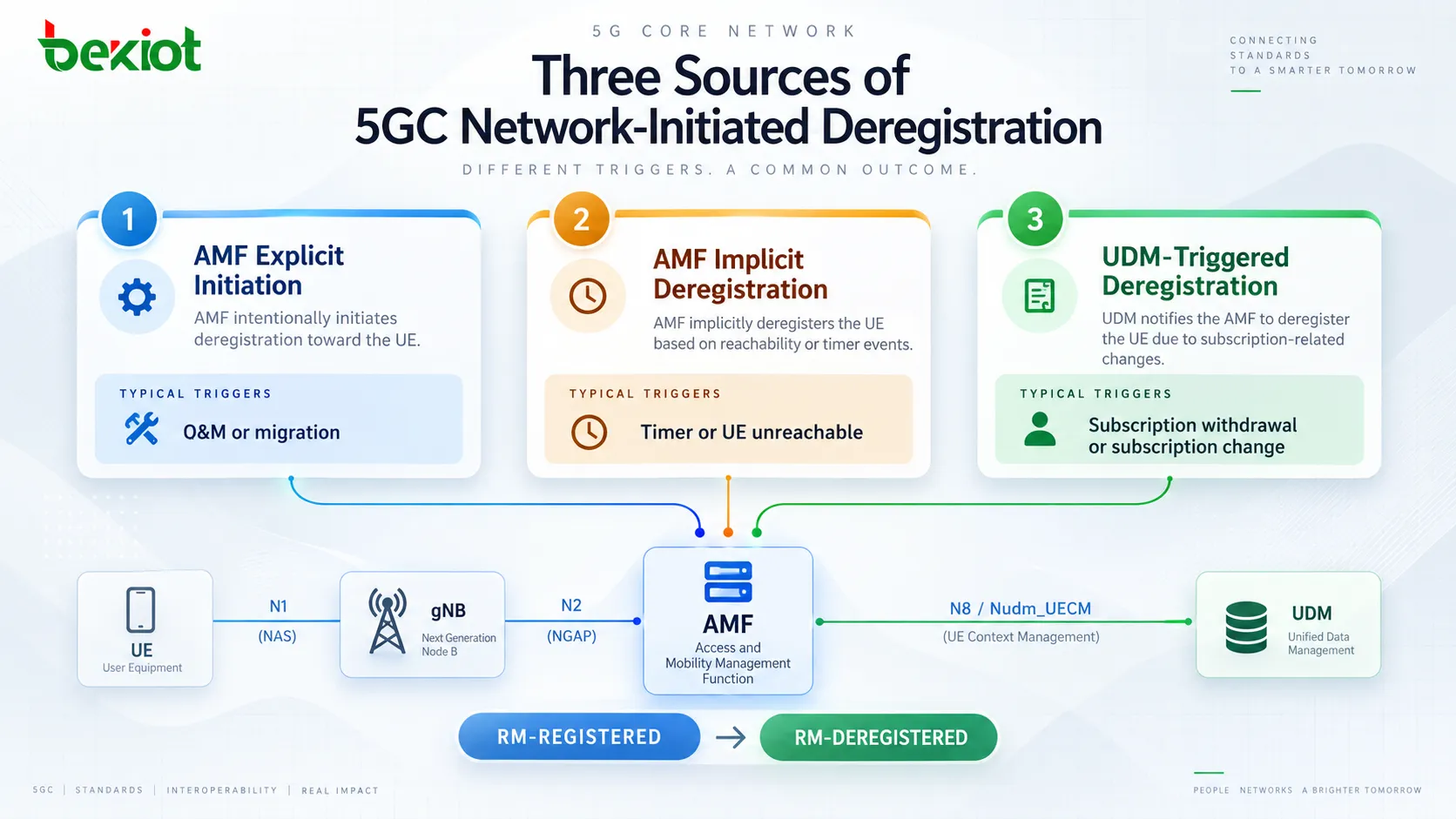
AMFの明示的処理、AMFの暗黙的登録解除、UDMを起点とする登録解除を分類した図
三つのトリガー分類。実際の状態遷移は対象アクセスと残存コンテキストによって決まります。

明示的NASシグナリングと暗黙的クリーンアップ

明示的登録解除では、AMFがUEにDeregistration Requestを送り、登録解除の対象アクセスを指定します。3GPPアクセスでCM-IDLEのUEには、先にページングが必要な場合があります。両アクセスで登録されている場合、メッセージを運ぶアクセスと登録解除されるアクセスは必ずしも同じではありません。

到達可能なUEは通常Deregistration Acceptを返します。Acceptがない場合は、配信、タイマー、異常手順の処理を調べます。それだけで暗黙的登録解除と判断することはできません。ネットワークのクリーンアップとUE確認は関連する処理ですが、どのキャプチャーでも同じ時間順序になる証拠ではありません。

暗黙的登録解除では、AMFはUEにNASのDeregistration Requestを送りません。代わりにタイマー履歴とAMFのコンテキスト処理を確認します。取得開始が遅いキャプチャーやNASインターフェースを含まないキャプチャーにも要求が現れないため、部分トレースでの欠落だけでは手順を分類できません。

加入契約撤回がAMFに伝わる仕組み

UDMは、担当AMFが登録したコールバックを使ってNudm_UECM_DeregistrationNotificationを呼び出します。加入契約撤回では、削除理由はSUBSCRIPTION_WITHDRAWNです。アクセス指定は3GPP、非3GPP、または両方を対象にでき、3GPP_ACCESSはAPI値の一つです。

AMFは指定されたアクセスで登録解除を実行し、通知を確認応答します。APIトレースでは、コールバック先、理由、アクセス指定、HTTP応答を確認します。確認応答は通知処理を示しますが、すべてのPDUセッションとユーザープレーンリソースがすでに削除されたことを単独で証明するものではありません。

ネットワークからUEへのNASメッセージでは、De-registration type IEが対象アクセスと再登録の要否を示します。5GMM原因値もUE動作を制御できます。UE起点の要求とは異なり、通常のネットワーク起点要求には5GS mobile identity IEが含まれません。既存のシグナリングコンテキストから加入者を特定します。

再登録の指定は別の登録手順を要求するもので、受け入れを保証しません。加入権限、アクセス制限、受信した原因値は引き続き適用されます。re-registration required = 1という固定値を、SUBSCRIPTION_WITHDRAWNだけから導いてはいけません。
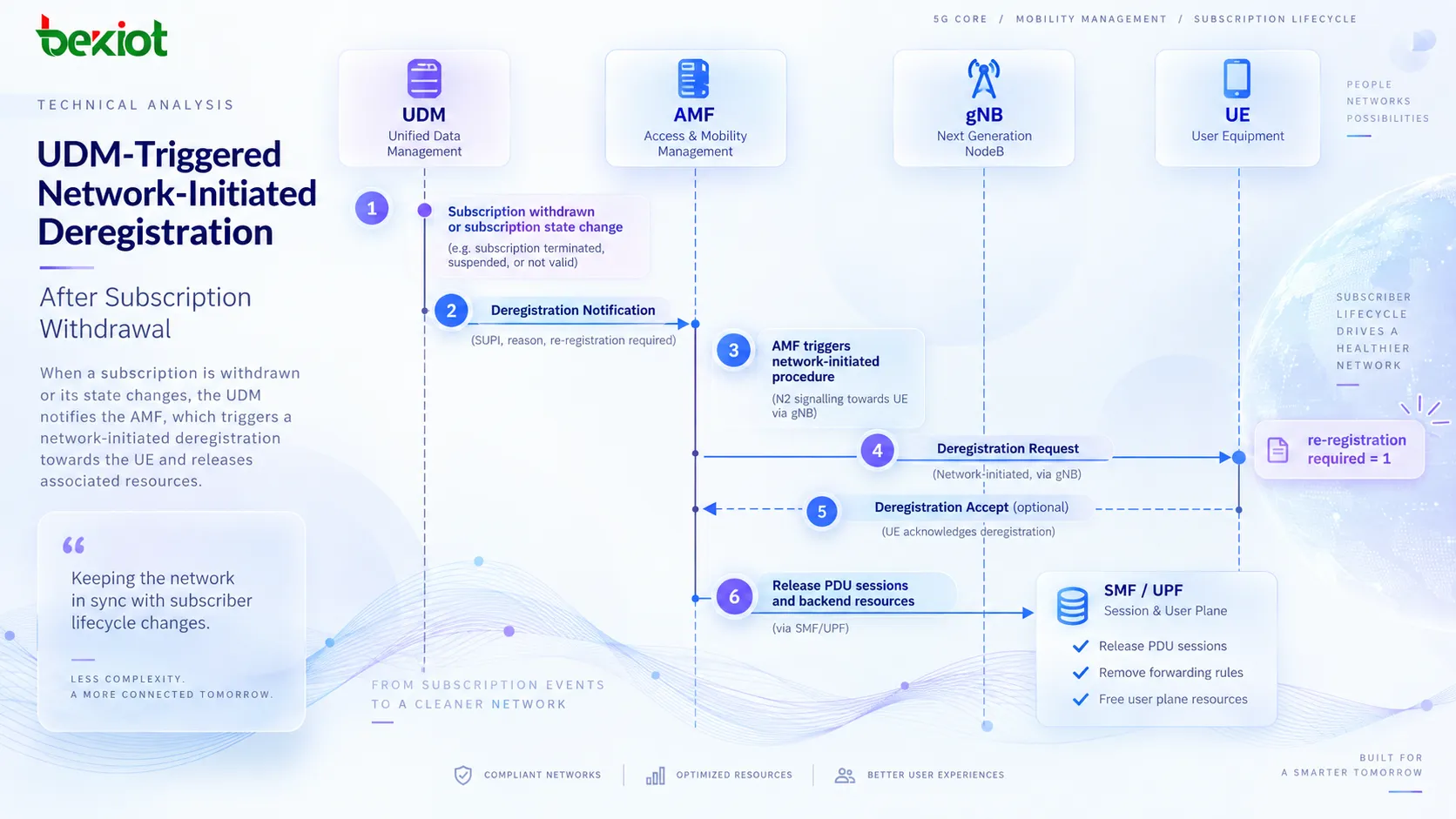
UDMからAMFへの加入契約撤回と、その後のNASシグナリングおよびセッション削除を示す概念フロー
加入契約撤回の概念フロー。固定の再登録値や簡略化された通知ラベルは、実際のAPI/NASフィールドを定義しません。トレースの理由、アクセス指定、NAS原因値を使用してください。

登録解除の影響を受けるリソースだけを解放する

終了すべきPDUセッションについて、AMFは該当SMFにSMコンテキスト解放を要求します。SMFはN4セッション解放で対象のUPF状態を削除し、関連ユーザープレーンリソースとSMポリシー終了を処理します。UDMのセッション登録やデータ変更通知の購読は、その条件が満たされたときに削除します。

UEがどのアクセスにも登録されていなくなった場合、AMポリシーおよびUEポリシーのアソシエーションも終了が必要になることがあります。別のアクセスが有効であれば、加入者コンテキストやポリシー状態の一括削除は誤りです。通常の単一アクセスセッション、マルチアクセスセッション、維持すべき有効なサービス状態を考慮します。

該当するNAS処理とリソース処理の後、既存のアクセスシグナリング接続を解放できます。無線接続やN2接続の解放だけでは登録解除を証明できず、一つのPDUセッションを削除しても自動的に登録が削除されるわけではありません。

緊急サービスは重要な例外です。基準手順では、確立済みの緊急PDUセッションがあるとAMFは登録解除を開始できず、代わりに規定に従って非緊急PDUセッションを解放します。「すべてのセッションを解放する」という無条件の規則を適用しないでください。

起点、方向、結果の状態を併せて読む

関連する削除理由を持つ先行UDM通知は、UDM起点のケースを裏付けます。AMFの運用記録は、AMFによる直接の明示的開始を裏付ける場合があります。タイマー満了とNAS要求なしのネットワークコンテキスト削除は、暗黙的登録解除を裏付ける場合があります。最初に見えるパケットは取得できた最初のパケットにすぎないため、原因を決める前にNFログを照合します。

  1. AMFとUDMの記録、タイムスタンプ、加入者コンテキストからトリガーを特定します。加入契約撤回と旧担当関係の移管を区別します。

  2. NASの方向を確認します。ネットワーク起動登録解除では要求がAMF → UE、確認応答がUE → AMFです。UE起動登録解除では、この役割が逆になります。

  3. アクセス指定、再登録要件、5GMM原因値があれば読み取ります。UEが接続済みでない場合は、ページング、NAS配信、タイマー処理を確認します。

  4. 対象SMF/UPFリソースと不要になったポリシーまたはUDM関係の解放を確認します。別アクセスや有効なセッションに必要なコンテキストが残っていることも確認します。

  5. AMFのアクセス別登録状態と、観測可能なUE応答を別々に確認します。再登録が必要なら、その後の試行と実際の結果を追跡します。

この方法なら、ネットワークの判断、メッセージ配信の失敗、その後のクリーンアップを区別できます。また、条件付き分岐や保持コンテキストで説明できるHTTP交換の欠落を、すべてプロトコルエラーと誤認することも避けられます。
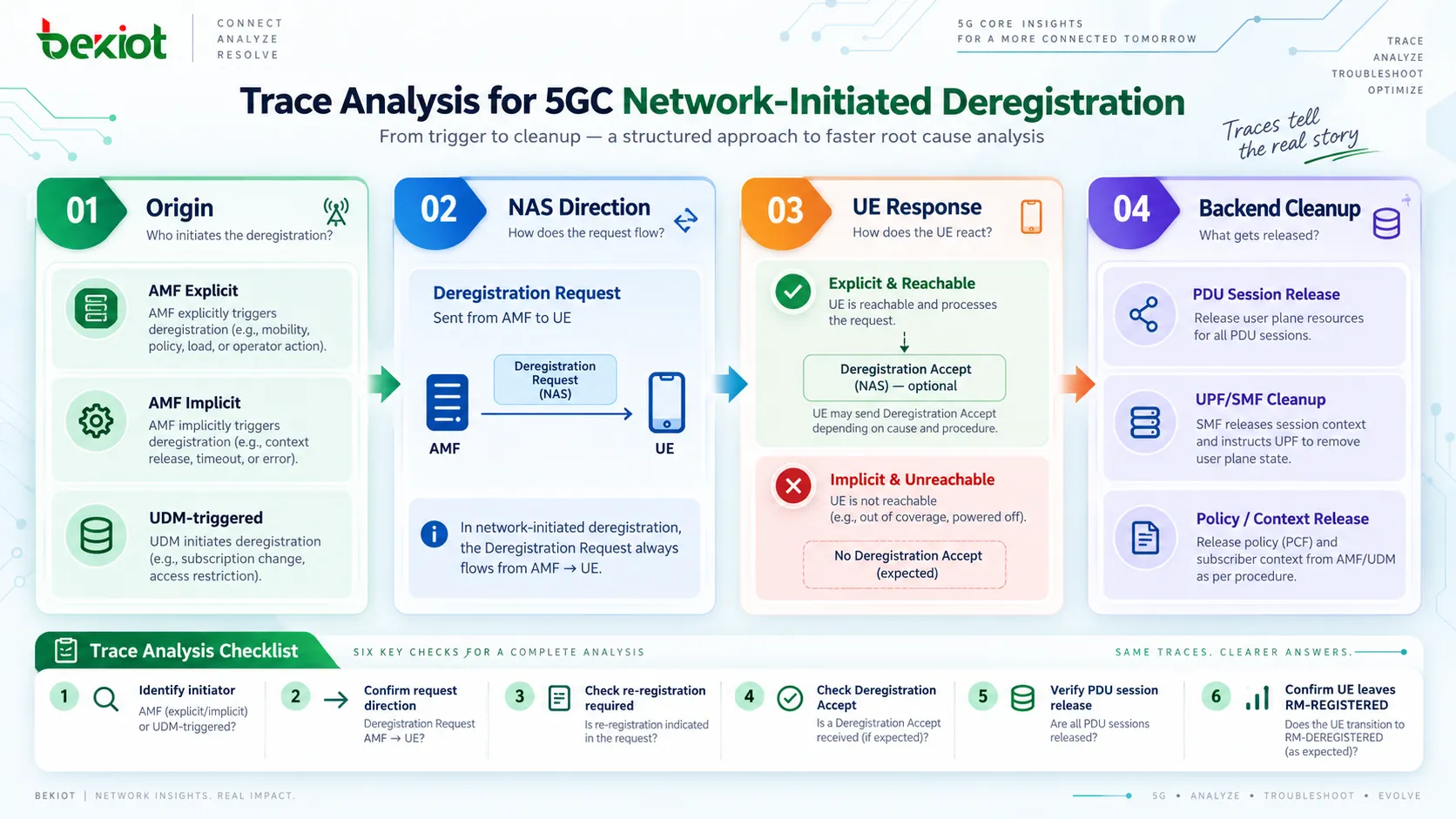
起点、NAS方向、UE応答、バックエンドの削除を確認するトレース解析チェックリスト
ネットワーク起動登録解除の確認点。リソース解放とUE応答は、アクセス、到達性、該当手順に依存します。

よくある質問

UEは必ずDeregistration Requestを受信しますか?

いいえ。暗黙的登録解除ではこのNASメッセージを省略します。明示的登録解除では該当条件の下でUEへの通知を試みます。部分キャプチャーにメッセージがないだけでは分岐を特定できません。

UDMはNASの登録解除要求を送信できますか?

いいえ。サービスインターフェースを通じて担当AMFに通知します。UE向けNAS手順とアクセス別の登録コンテキストはAMFが処理します。

再登録の要求はサービス復旧を保証しますか?

いいえ。新たな登録試行を指示するものです。ネットワークは更新された加入契約、制限、適用原因値を引き続き評価します。受け入れとデータ接続は別々に確認する必要があります。

クリーンアップはUE起動登録解除とまったく異なりますか?

いいえ。セッションとポリシーのクリーンアップは重なる場合があります。主な違いは、トリガー、NAS方向、期待されるUE動作、再登録制御、およびアクセスやサービスの例外です。

関連手順と標準

UE起動登録解除とシグナリングの方向を比較してください。セッション削除と登録削除の違いは、PDUセッション解放を参照してください。

ステージ2の基準は3GPP TS 23.502、4.2.2.3.3節です。NAS動作とメッセージ内容は3GPP TS 24.501、5.5.2.3節、UDM通知データは3GPP TS 29.503で規定されています。
おすすめ商品
カタログ
顧客サービス 電話
We use cookie to improve your online experience. By continuing to browse this website, you agree to our use of cookie.

Cookies

This Cookie Policy explains how we use cookies and similar technologies when you access or use our website and related services. Please read this Policy together with our Terms and Conditions and Privacy Policy so that you understand how we collect, use, and protect information.

By continuing to access or use our Services, you acknowledge that cookies and similar technologies may be used as described in this Policy, subject to applicable law and your available choices.

Updates to This Cookie Policy

We may revise this Cookie Policy from time to time to reflect changes in legal requirements, technology, or our business practices. When we make updates, the revised version will be posted on this page and will become effective from the date of publication unless otherwise required by law.

Where required, we will provide additional notice or request your consent before applying material changes that affect your rights or choices.

What Are Cookies?

Cookies are small text files placed on your device when you visit a website or interact with certain online content. They help websites recognize your browser or device, remember your preferences, support essential functionality, and improve the overall user experience.

In this Cookie Policy, the term “cookies” also includes similar technologies such as pixels, tags, web beacons, and other tracking tools that perform comparable functions.

Why We Use Cookies

We use cookies to help our website function properly, remember user preferences, enhance website performance, understand how visitors interact with our pages, and support security, analytics, and marketing activities where permitted by law.

We use cookies to keep our website functional, secure, efficient, and more relevant to your browsing experience.

Categories of Cookies We Use

Strictly Necessary Cookies

These cookies are essential for the operation of the website and cannot be disabled in our systems where they are required to provide the service you request. They are typically set in response to actions such as setting privacy preferences, signing in, or submitting forms.

Without these cookies, certain parts of the website may not function correctly.

Functional Cookies

Functional cookies enable enhanced features and personalization, such as remembering your preferences, language settings, or previously selected options. These cookies may be set by us or by third-party providers whose services are integrated into our website.

If you disable these cookies, some services or features may not work as intended.

Performance and Analytics Cookies

These cookies help us understand how visitors use our website by collecting information such as traffic sources, page visits, navigation behavior, and general interaction patterns. In many cases, this information is aggregated and does not directly identify individual users.

We use this information to improve website performance, usability, and content relevance.

Targeting and Advertising Cookies

These cookies may be placed by our advertising or marketing partners to help deliver more relevant ads and measure the effectiveness of campaigns. They may use information about your browsing activity across different websites and services to build a profile of your interests.

These cookies generally do not store directly identifying personal information, but they may identify your browser or device.

First-Party and Third-Party Cookies

Some cookies are set directly by our website and are referred to as first-party cookies. Other cookies are set by third-party services, such as analytics providers, embedded content providers, or advertising partners, and are referred to as third-party cookies.

Third-party providers may use their own cookies in accordance with their own privacy and cookie policies.

Information Collected Through Cookies

Depending on the type of cookie used, the information collected may include browser type, device type, IP address, referring website, pages viewed, time spent on pages, clickstream behavior, and general usage patterns.

This information helps us maintain the website, improve performance, enhance security, and provide a better user experience.

Your Cookie Choices

You can control or disable cookies through your browser settings and, where available, through our cookie consent or preference management tools. Depending on your location, you may also have the right to accept or reject certain categories of cookies, especially those used for analytics, personalization, or advertising purposes.

Please note that blocking or deleting certain cookies may affect the availability, functionality, or performance of some parts of the website.

Restricting cookies may limit certain features and reduce the quality of your experience on the website.

Cookies in Mobile Applications

Where our mobile applications use cookie-like technologies, they are generally limited to those required for core functionality, security, and service delivery. Disabling these essential technologies may affect the normal operation of the application.

We do not use essential mobile application cookies to store unnecessary personal information.

How to Manage Cookies

Most web browsers allow you to manage cookies through browser settings. You can usually choose to block, delete, or receive alerts before cookies are stored. Because browser controls vary, please refer to your browser provider’s support documentation for details on how to manage cookie settings.

Contact Us

If you have any questions about this Cookie Policy or our use of cookies and similar technologies, please contact us at support@becke.cc .