
What Does Interfering with Emergency Communication Mean? Laws, Risks, and Common Scenarios
Learn what interfering with emergency communication means, what actions may qualify, why it can affect 911 and public safety response, how laws can vary by jurisdiction, and how organizations can reduce communication disruption risks.
Becke Telcom
Interfering with emergency communication refers to intentional conduct that blocks, disrupts, misleads, or prevents a person or organization from requesting urgent help. In practical terms, that may involve stopping someone from calling 911, damaging a communication device, using illegal signal-blocking equipment, interfering with dispatch channels, or sending false information that delays responders.
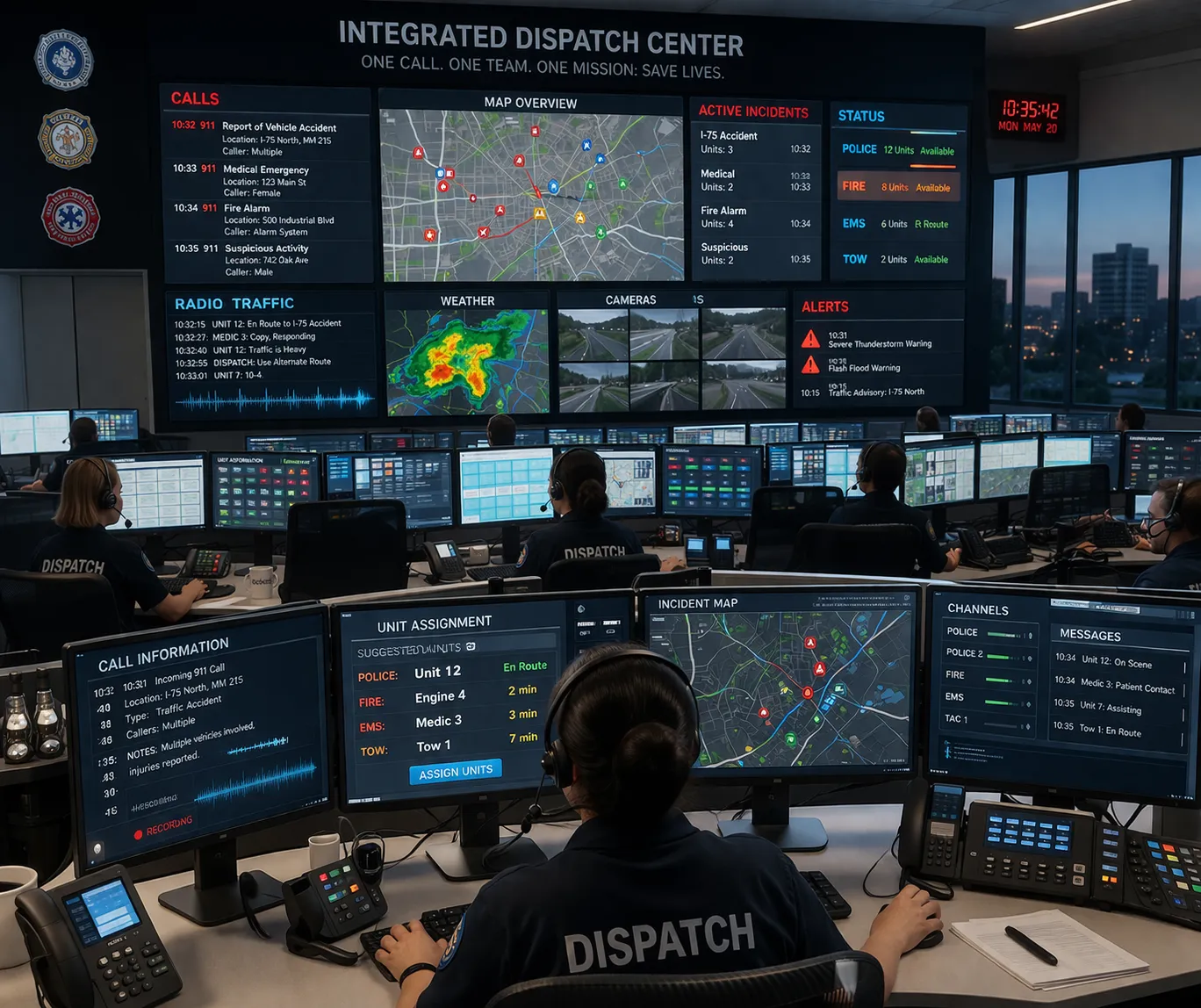
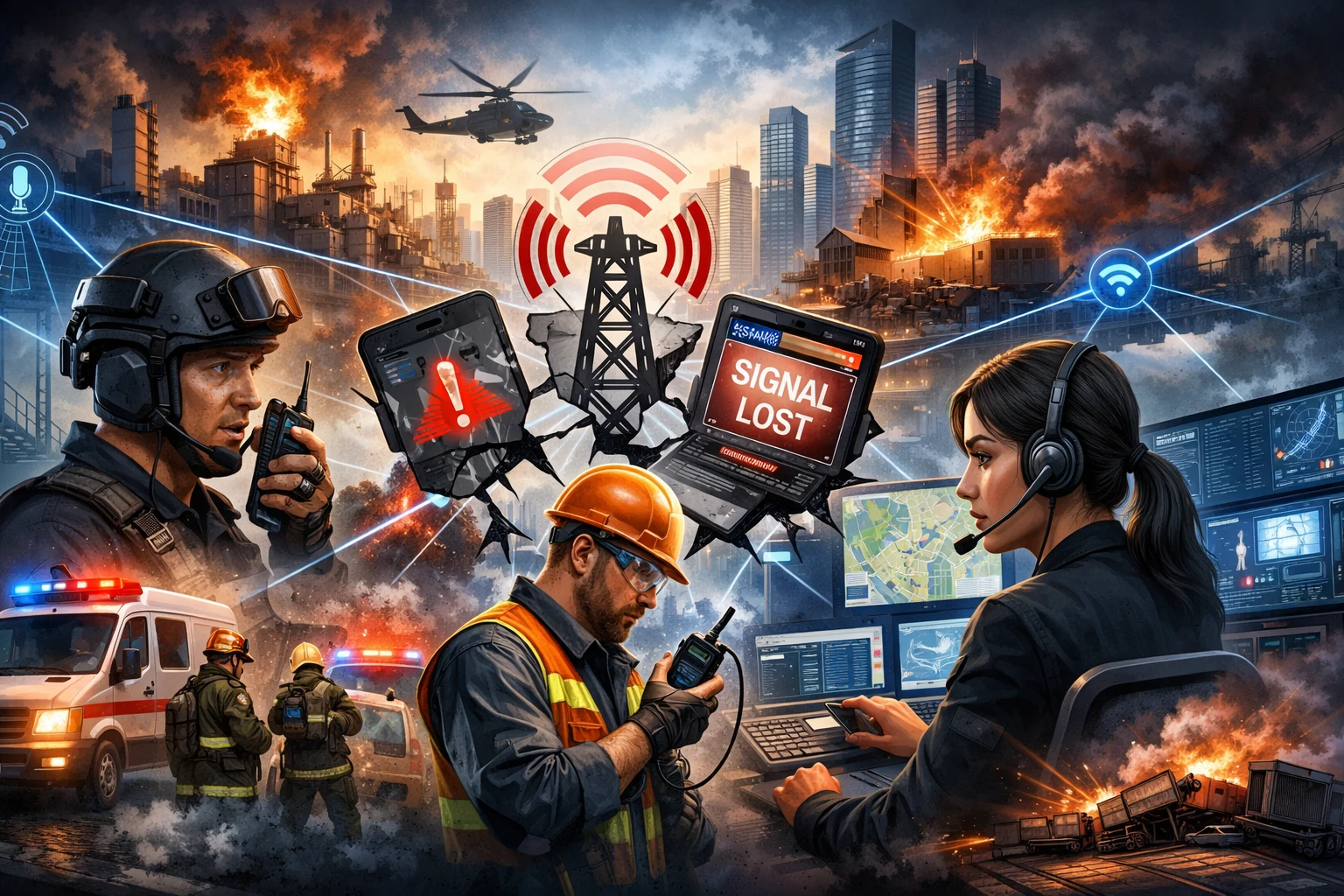
This topic matters because emergency communication is not just about placing a call. It is part of a larger response chain that can include public safety answering points, radio dispatch, alarm transmission, cellular networks, emergency telephones, intercom terminals, and on-site control rooms. When that chain is deliberately interrupted, the result may be delayed police, fire, medical, or security response at the exact moment speed matters most.
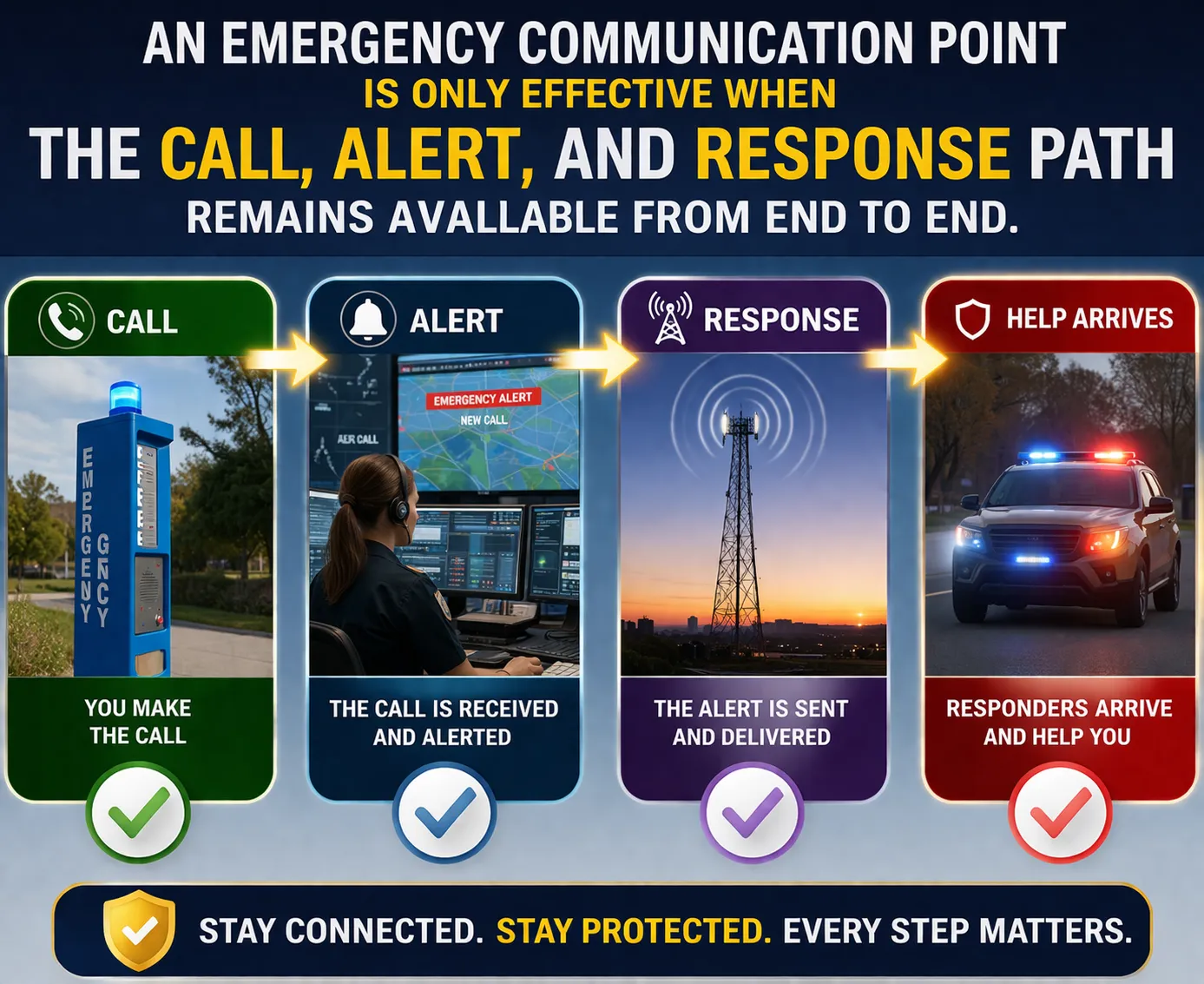
An emergency communication point is only effective when the call path remains available, reliable, and free from intentional disruption.
What Is Interfering with Emergency Communication?
At its core, interfering with emergency communication means knowingly obstructing a request for help or disrupting the communication methods used to report danger, injury, fire, violence, medical distress, or another urgent threat. The exact legal wording can vary by jurisdiction, but the general idea is consistent: a person should not intentionally prevent an emergency message from being sent, received, or acted upon.
In a modern environment, emergency communication can take several forms. It may be a mobile phone call, a radio transmission, an industrial emergency telephone, a highway call box, an alarm link, a paging path, or a dispatch console workflow. Because emergency reporting now relies on both human communication and connected systems, interference can happen through physical obstruction, technical disruption, or false information.
Emergency communication is not merely a conversation. It is the first operational step in rescue, dispatch, protection, and incident control.
Common Examples of Emergency Communication Interference
Blocking a 911 Call or Emergency Request for Assistance
One of the most direct examples is preventing another person from placing an emergency call. That can include grabbing a phone during a crisis, stopping someone from dialing an emergency number, ending a live call for help, or physically restraining a person who is trying to contact responders.
Even though this scenario sounds simple, it is often the most important from a legal and public safety standpoint. Emergency communication law is designed to protect access to urgent assistance, not just protect devices or networks. If the action prevents help from being requested when there is immediate risk, it may be treated seriously even if the disruption lasts only a short time.
Taking Away, Damaging, or Disabling a Phone
Interference can also happen when someone removes, breaks, disables, hides, or destroys a device that could be used to call for help. In older situations, this might involve cutting a wired telephone line. In modern settings, it may involve smashing a smartphone, removing a battery-powered handset, disabling a VoIP terminal, or disconnecting a power source or network cable that supports emergency calling.
The important point is that emergency communication depends on usable equipment. If a person intentionally damages the device or its connection in order to stop a call, the interference is not merely about property. It directly affects the victim's ability to reach law enforcement, fire services, emergency medical personnel, or an internal security control room.
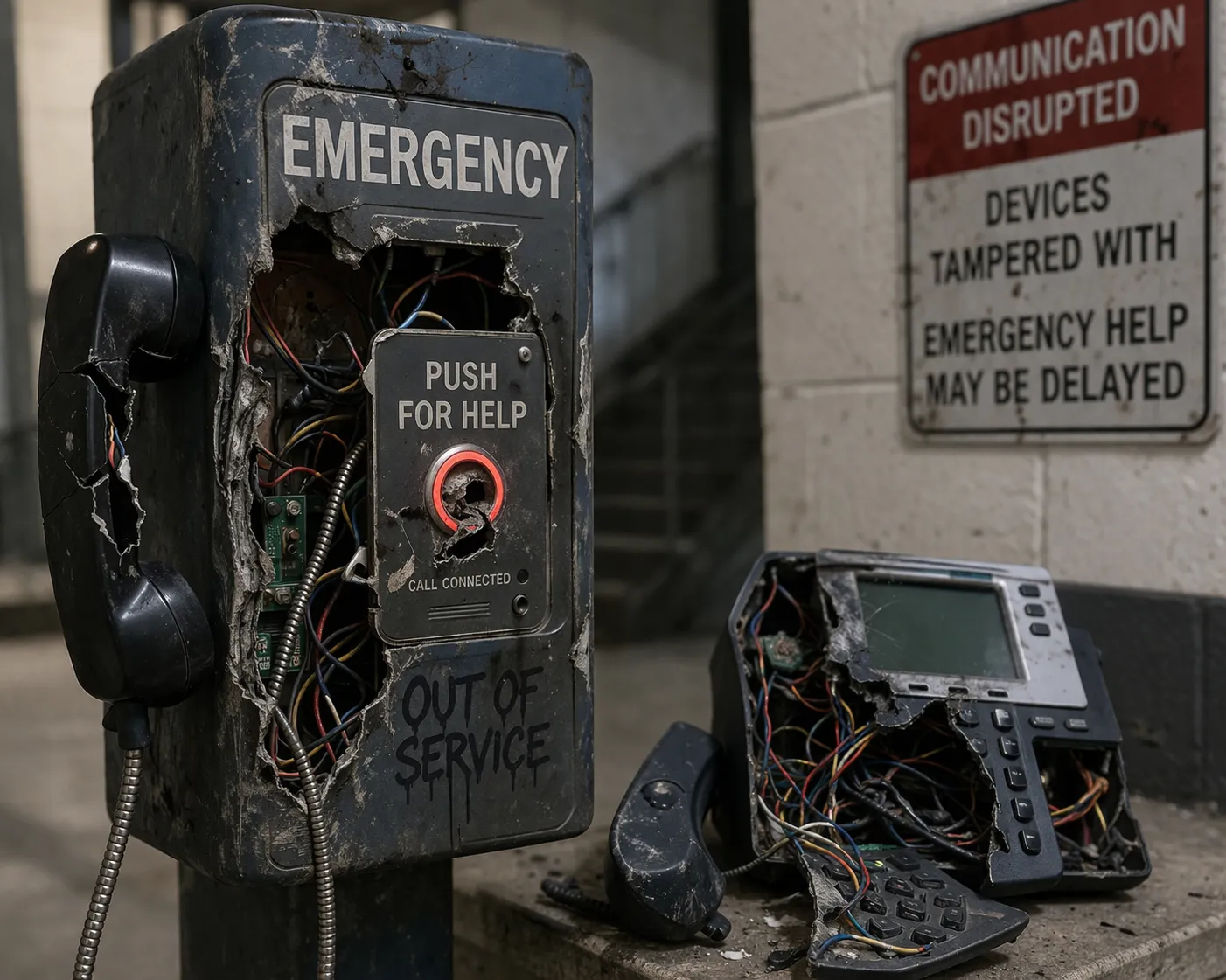
Physical damage to a phone, intercom, cable, or powered endpoint can become emergency communication interference when it blocks an urgent call for help.
Using Jammers or Other Signal-Blocking Devices
Technical interference is another major category. A signal jammer or similar blocking device can disrupt cellular, radio, GPS, or wireless communications. In an emergency, that kind of disruption may prevent a 911 call, interrupt public safety radio traffic, or stop incident information from reaching the people who need it.
This is one reason the topic extends beyond criminal law pages and into communication infrastructure. A jammer is not just an inconvenience. In the wrong setting, it can obstruct emergency calling, dispatch coordination, workforce protection, and incident escalation procedures. That is especially serious in locations such as warehouses, transport corridors, campuses, industrial sites, healthcare environments, and public venues.
Interfering with Alarm, Intercom, or Dispatch Equipment
Emergency communication does not always begin with a public phone call. In many facilities, it starts with an alarm, a help point, an intercom terminal, a radio channel, or a dispatch workstation. Someone who intentionally disables those systems may interfere with emergency reporting even if no traditional telephone is involved.
Examples can include muting a monitored help point, disabling an emergency intercom, unplugging a dispatch console connection, blocking a radio relay path, or tampering with a panel that forwards urgent information to responders. In a business, industrial, transport, or campus setting, these actions can delay the recognition of an emergency before external services are even contacted.
Sending False Information About an Emergency
Not every form of interference involves cutting a connection. False information can also disrupt emergency communication. A person may knowingly transmit a fake message that there is no emergency, falsely claim responders are no longer needed, or provide misleading information that redirects attention away from the real incident.
This matters because dispatch and response systems depend on trusted information. When emergency personnel receive false or manipulated communications, they may lose time verifying the situation, reroute resources incorrectly, or fail to recognize the true level of risk. In effect, the communication path still exists, but the content has been weaponized to obstruct help.
In emergency response, false information can be as dangerous as a disconnected line because both can delay the arrival of help.
Why This Conduct Is Treated So Seriously
Emergency communication sits at the beginning of the entire response process. If the first alert never reaches a dispatcher, control room, or response team, every later step can fail or arrive too late. That is why interference is often treated differently from an ordinary argument, property dispute, or equipment fault. The conduct can increase the risk of injury, death, property loss, or wider operational harm.
There is also a broader public safety dimension. Communication disruption may affect not only a single caller, but also teams coordinating by radio, site personnel trying to issue a page, or emergency operators working across multiple channels. In connected environments, a single act of interference can have cascading consequences for situational awareness and incident management.
Do Laws Differ by State?
Yes. Laws and statutory wording can vary significantly by jurisdiction, even when they address the same basic problem. Some states use the phrase interfering with emergency communication or interfering with emergency communications. Others use narrower phrases such as interference with an emergency call, interference with an emergency request for assistance, or unlawful interference with emergency radio communications.
That difference matters for both SEO and legal interpretation. A user searching this topic may be looking for a general explanation, a state-specific offense, a domestic violence context, a public safety radio issue, or a question about jamming devices. For that reason, a strong informational article should explain the common concept clearly while also noting that definitions, elements, and penalties may differ depending on where the incident occurred.
For example, some state laws focus on preventing another person from making an emergency call, while others also cover interference with official emergency radio channels or the transmission of false emergency information. Louisiana law explicitly describes conduct such as disconnecting, damaging, disabling, removing, or using physical force or intimidation to interfere with emergency communication, which shows how broad the concept can become in practice.
This article is for general informational purposes only and is not legal advice. Anyone dealing with an actual charge, investigation, or compliance question should review the law of the relevant jurisdiction and seek qualified legal guidance.
Emergency communication extends beyond a single phone call and often includes dispatch consoles, radio coordination, alarms, and incident response workflows.
Technical Failure vs. Intentional Interference
It is important to separate deliberate interference from ordinary technical failure. A dropped call, network outage, overloaded cellular sector, failed battery, damaged cable after a storm, or software fault can all disrupt emergency communication without any intentional wrongdoing. These are reliability and resilience issues, not necessarily criminal interference.
Intentional interference, by contrast, involves knowing conduct aimed at stopping, distorting, or obstructing emergency communication. The difference lies in purpose, awareness, and action. A system failure may be accidental. Interference generally involves an actor who chooses to block help, damage the communication path, misuse equipment, or inject false information into the response process.
From an operational perspective, organizations should prepare for both categories. They need resilient networks and backup paths for accidental failures, but they also need tamper awareness, monitored endpoints, event logs, and security controls to reduce the risk of deliberate interference.
Reliable emergency communication depends on two protections at once: resilience against failure and resistance to intentional disruption.
How Organizations Can Reduce the Risk
Organizations cannot eliminate every threat, but they can reduce exposure by treating emergency communication as a protected service rather than an ordinary convenience feature. That means designing systems around availability, visibility, and controlled escalation.
Deploy clearly identified emergency phones, help points, intercoms, or panic endpoints in high-risk areas.
Use redundant communication paths, backup power, and monitored network connectivity for critical endpoints.
Maintain event logging so call attempts, alarm activity, disconnects, and tamper events can be reviewed.
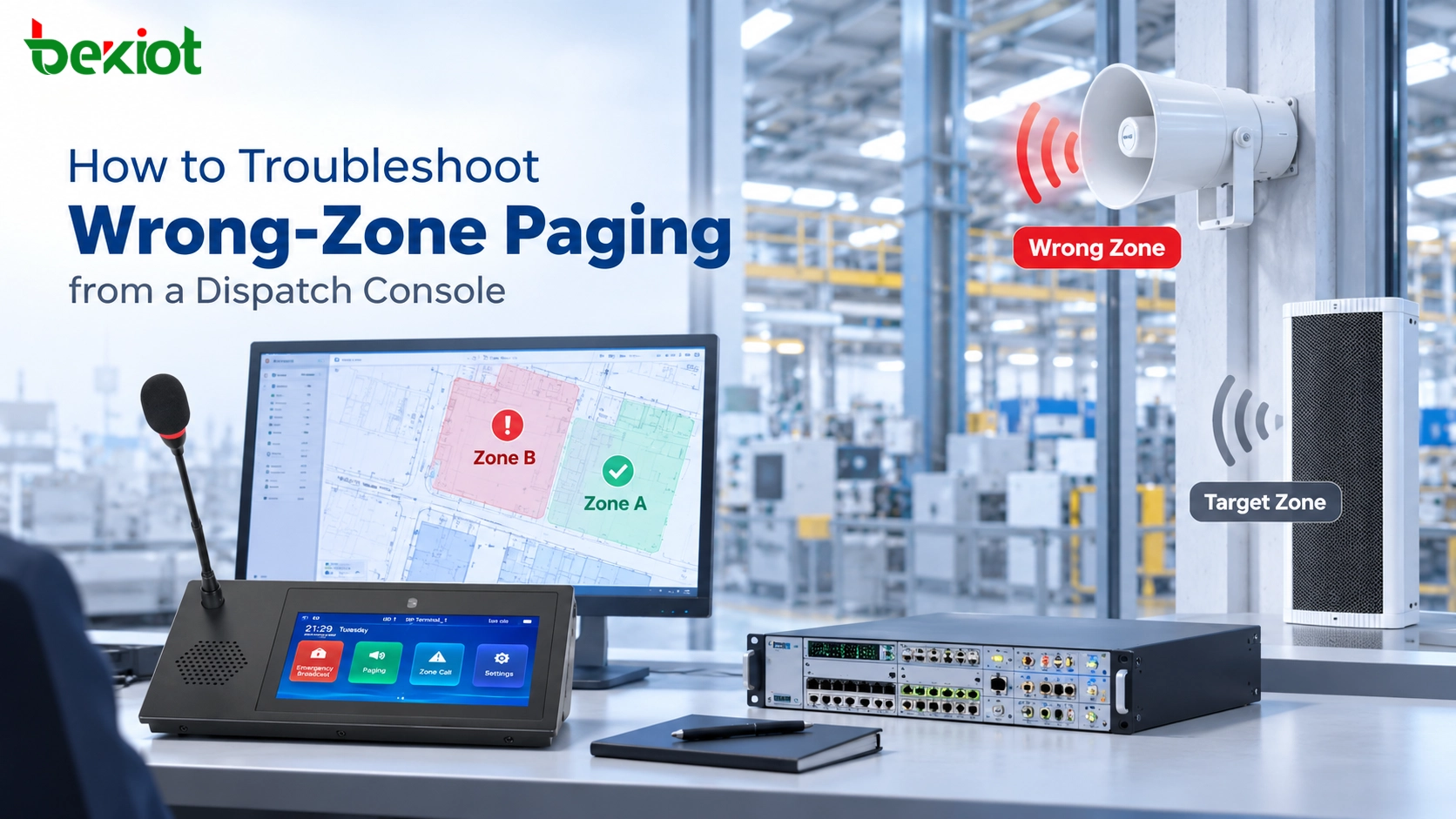
Protect dispatch consoles, radio channels, and control room workflows with access controls and supervision.
Train staff to recognize both physical obstruction and technical interference, including illegal jamming risks.
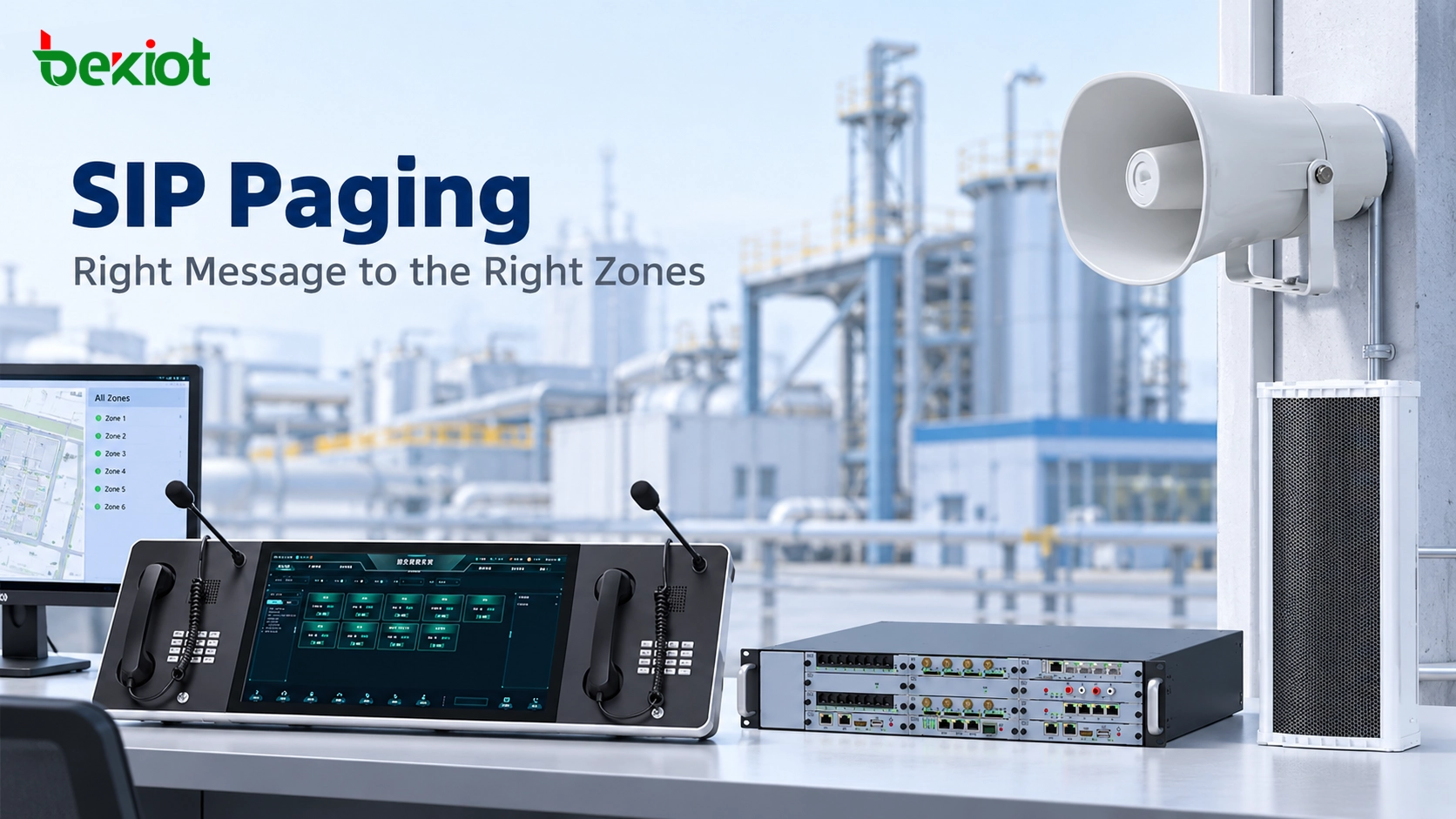
Integrate alarms, paging, voice communication, and dispatch visibility so incidents can be escalated quickly.
In industrial, transport, campus, and public safety environments, the goal is not only to make communication possible but to make interruption visible. The earlier a blocked call path or disabled endpoint is detected, the faster teams can restore service or route around the problem.
Conclusion
Interfering with emergency communication is a serious issue because it targets the moment when a person, team, or facility is trying to obtain urgent help. Whether the interference happens by force, device damage, signal blocking, equipment tampering, or false messaging, the practical effect is the same: it can delay response when every second matters.
For website content, this topic works best as an informational SEO article that explains the meaning, the common scenarios, the public safety risks, and the fact that laws vary by jurisdiction. That approach serves both general readers and professional audiences far better than turning the keyword into a narrow sales page.
At Becke Telcom, we support resilient emergency communication environments with industrial telephones, SIP intercoms, paging links, emergency help points, and dispatch-oriented communication solutions designed for high-availability response workflows.
FAQ
What counts as interfering with emergency communication?
It generally refers to intentional conduct that blocks, disrupts, disables, or misleads emergency reporting. Examples may include stopping a 911 call, taking away a phone, damaging an emergency endpoint, using a jammer, interfering with radio or dispatch channels, or sending false information that delays help.
Is interfering with emergency communication always about a phone call?
No. In many environments, emergency communication can also involve radio traffic, intercom terminals, call boxes, alarm links, dispatch consoles, or other systems used to report urgent danger and coordinate response.
Is signal jamming part of this topic?
Yes. Signal jamming can interfere with wireless communications that support emergency calling, public safety coordination, and location-aware response workflows. That is why jamming is often discussed alongside emergency communication interference.
Do all states use the same legal wording?
No. Some states use the phrase interfering with emergency communication, while others use related wording such as interference with an emergency call, interference with an emergency request for assistance, or unlawful interference with emergency radio communications.
How is intentional interference different from a network outage?
A network outage or equipment failure may be accidental. Intentional interference involves knowing conduct aimed at preventing help from being requested, transmitted, received, or acted upon.
We use cookie to improve your online experience. By continuing to browse this website, you agree to our use of cookie.
Cookies
This Cookie Policy explains how we use cookies and similar technologies when you access or use our website and related services. Please read this Policy together with our Terms and Conditions and Privacy Policy so that you understand how we collect, use, and protect information.
By continuing to access or use our Services, you acknowledge that cookies and similar technologies may be used as described in this Policy, subject to applicable law and your available choices.
Updates to This Cookie Policy
We may revise this Cookie Policy from time to time to reflect changes in legal requirements, technology, or our business practices. When we make updates, the revised version will be posted on this page and will become effective from the date of publication unless otherwise required by law.
Where required, we will provide additional notice or request your consent before applying material changes that affect your rights or choices.
What Are Cookies?
Cookies are small text files placed on your device when you visit a website or interact with certain online content. They help websites recognize your browser or device, remember your preferences, support essential functionality, and improve the overall user experience.
In this Cookie Policy, the term “cookies” also includes similar technologies such as pixels, tags, web beacons, and other tracking tools that perform comparable functions.
Why We Use Cookies
We use cookies to help our website function properly, remember user preferences, enhance website performance, understand how visitors interact with our pages, and support security, analytics, and marketing activities where permitted by law.
We use cookies to keep our website functional, secure, efficient, and more relevant to your browsing experience.
Categories of Cookies We Use
Strictly Necessary Cookies
These cookies are essential for the operation of the website and cannot be disabled in our systems where they are required to provide the service you request. They are typically set in response to actions such as setting privacy preferences, signing in, or submitting forms.
Without these cookies, certain parts of the website may not function correctly.
Functional Cookies
Functional cookies enable enhanced features and personalization, such as remembering your preferences, language settings, or previously selected options. These cookies may be set by us or by third-party providers whose services are integrated into our website.
If you disable these cookies, some services or features may not work as intended.
Performance and Analytics Cookies
These cookies help us understand how visitors use our website by collecting information such as traffic sources, page visits, navigation behavior, and general interaction patterns. In many cases, this information is aggregated and does not directly identify individual users.
We use this information to improve website performance, usability, and content relevance.
Targeting and Advertising Cookies
These cookies may be placed by our advertising or marketing partners to help deliver more relevant ads and measure the effectiveness of campaigns. They may use information about your browsing activity across different websites and services to build a profile of your interests.
These cookies generally do not store directly identifying personal information, but they may identify your browser or device.
First-Party and Third-Party Cookies
Some cookies are set directly by our website and are referred to as first-party cookies. Other cookies are set by third-party services, such as analytics providers, embedded content providers, or advertising partners, and are referred to as third-party cookies.
Third-party providers may use their own cookies in accordance with their own privacy and cookie policies.
Information Collected Through Cookies
Depending on the type of cookie used, the information collected may include browser type, device type, IP address, referring website, pages viewed, time spent on pages, clickstream behavior, and general usage patterns.
This information helps us maintain the website, improve performance, enhance security, and provide a better user experience.
Your Cookie Choices
You can control or disable cookies through your browser settings and, where available, through our cookie consent or preference management tools. Depending on your location, you may also have the right to accept or reject certain categories of cookies, especially those used for analytics, personalization, or advertising purposes.
Please note that blocking or deleting certain cookies may affect the availability, functionality, or performance of some parts of the website.
Restricting cookies may limit certain features and reduce the quality of your experience on the website.
Cookies in Mobile Applications
Where our mobile applications use cookie-like technologies, they are generally limited to those required for core functionality, security, and service delivery. Disabling these essential technologies may affect the normal operation of the application.
We do not use essential mobile application cookies to store unnecessary personal information.
How to Manage Cookies
Most web browsers allow you to manage cookies through browser settings. You can usually choose to block, delete, or receive alerts before cookies are stored. Because browser controls vary, please refer to your browser provider’s support documentation for details on how to manage cookie settings.
Contact Us
If you have any questions about this Cookie Policy or our use of cookies and similar technologies, please contact us at support@becke.cc .