
百科事典
2026-08-04 18:23:59
3つのモビリティタイマーは5GC登録をどのように制御するのか
T3512、モバイル到達可能タイマー、暗黙的登録解除タイマーを通して5GCのモビリティ管理タイマーを解説し、UEの到達性、AMFでのコンテキスト保持、ページング制御、登録動作を取り上げます。

ベッケテレコム

3つのモビリティタイマーは5GC登録をどのように制御するのか

5Gデバイスがコアネットワークとのアクティブなシグナリング接続を常に維持するわけではありません。通常、UEはトラフィック需要、無線状態、バッテリー節約の必要性、ネットワーク側のリソース制御に応じて、接続状態とアイドル状態の間を移行します。課題は単純ですが重要です。ネットワークはUEへ到達できるだけの情報を把握する必要がある一方、すでに到達不能かもしれないデバイスに無線リソース、ページング処理、AMFメモリを浪費してはなりません。

ここで実用的な役割を果たすのがモビリティ管理タイマーです。5GCでは、登録状態、UEの到達性、コンテキスト保持を制御するために複数のタイマーが使用されます。N1インターフェース周辺で特に重要なのは、周期登録更新タイマー(T3512)モバイル到達可能タイマー暗黙的登録解除タイマーの3つです。

これらのタイマーは同じ役割を担うものではありません。T3512は主にUE側で動作し、周期登録更新の動作を制御します。モバイル到達可能タイマーと暗黙的登録解除タイマーはAMF側で管理され、ネットワークがUEへのページングやUEコンテキストの保持をどの程度継続するかに影響します。3つを組み合わせることで、まずUEがまだ存在するかを確認し、到達性が不確かになったらページングを減らし、完全に失われたと判断される段階でコンテキストを削除するという段階的な処理が実現します。
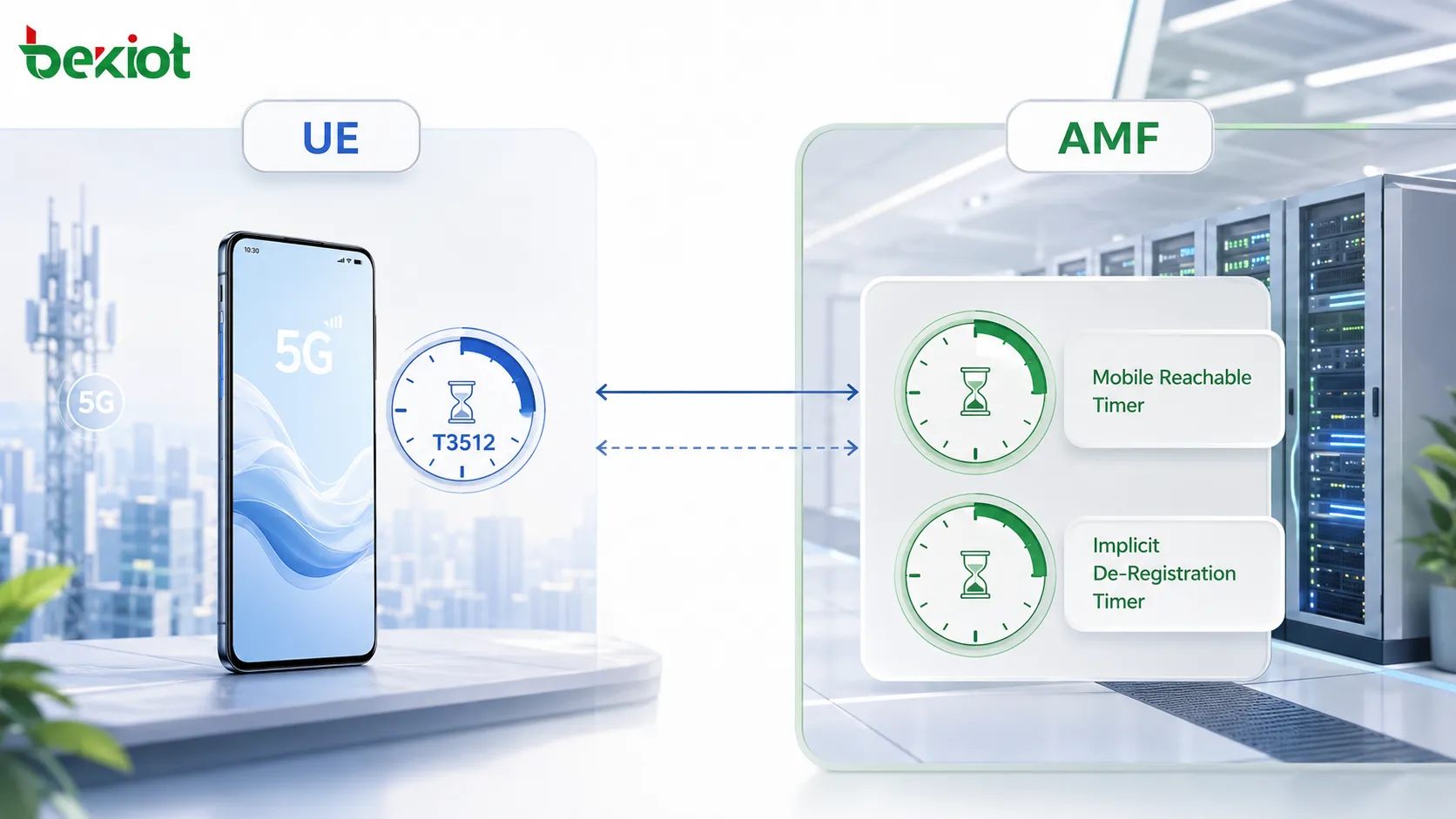
UE側のT3512とAMF側のモバイル到達可能タイマーおよび暗黙的登録解除タイマーを示す5GCモビリティ管理タイマー
5GCのモビリティタイマーはUEとAMFの役割を分担し、すべてのデバイスを常時接続することなく到達性を管理します。

これらのタイマーが重要な理由

5GCのモビリティ管理は、ハンドオーバーやセル間移動だけを意味するものではありません。登録後にネットワークがUEをどのように管理するかも含まれます。デバイスが登録されると、AMFはUEの識別、モビリティ状態の制御、その後のシグナリングを支援するコンテキストを保持します。この情報には価値がありますが、保持にはリソースが必要です。

ネットワークがUEコンテキストを早すぎる段階で削除すると、ユーザー体験が損なわれる可能性があります。UEが一時的に到達不能だっただけでも、アイドル状態から戻った際に完全な登録手順をやり直さなければなりません。反対に、コンテキストとページング動作を長く維持しすぎると、AMFと無線アクセスネットワークは、消失したデバイス、予期せず電源が切れたデバイス、または弱いカバレッジへ移動したデバイスを探すためにリソースを浪費します。

3つのタイマーは、異なる許容段階を設けることでこの問題を解決します。T3512はUEに定期的な状態通知を求めます。モバイル到達可能タイマーは、UEがアイドル状態に入った後にAMFへ猶予期間を与えます。暗黙的登録解除タイマーは、UEコンテキストを削除する前の最終期限を定めます。この階層的な方式により、ネットワーク効率とユーザーサービスの継続性の両方が守られます。

T3512がUEを可視状態に保つ

T3512はUE側の周期登録更新タイマーです。一般的に示されるデフォルト値は54分です。このタイマーは、UEが5GMM-REGISTERED状態にある間に使用されます。他のシグナリング活動がない場合でも、ネットワークが長時間UEを追跡できなくなることを防ぐのが目的です。

T3512の動作は接続管理状態によって変わります。T3512の満了時にUEがCM-IDLEであれば、UEは周期登録更新手順を開始する必要があります。これにより、UEがまだ存在していることをネットワークへ通知し、AMFはUE状態の認識を更新できます。

T3512が満了した時点でUEがすでにCM-CONNECTEDにある場合、動作は異なります。タイマーが満了したという理由だけで、新しい周期登録更新手順を開始する必要はありません。UEはT3512を再起動します。UEがすでに接続中であれば、ネットワークはアクティブなシグナリング接続を通してUEとやり取りできるためです。

T3512はAMFによって割り当てられます。UEは初期登録またはモビリティ登録更新時に、Registration Acceptメッセージでその値を受信します。そのためT3512はシグナリング上で確認できます。一方、AMFローカルのタイマーは内部設定であり、同じ方法で無線区間を伝送されません。

タイマー 主な管理側 代表的な開始条件 満了時の結果
T3512 UE 時間が経過する間もUEが登録状態を維持 CM-IDLEでは周期登録更新、CM-CONNECTEDでは再起動
モバイル到達可能タイマー AMF UEがCM-IDLEへ移行 AMFはUEへのページングを停止するが、UEコンテキストは保持
暗黙的登録解除タイマー AMF アイドル状態でモバイル到達可能タイマーが満了 AMFが暗黙的登録解除を開始し、UEコンテキストを削除

AMFタイマーが無駄を減らす

モバイル到達可能タイマーはAMFによって制御されます。代表的な値はT3512に4分を加えた時間ですが、実際の値はAMF側の設定です。UEがCM-IDLEへ移行すると開始されます。N1 NASシグナリング接続が再び確立され、UEが接続状態へ戻ると通常は停止します。

このタイマーは、ネットワークがUEをまだ到達可能とみなす期間を表します。動作中は、ダウンリンクシグナリングやサービス処理が必要な場合にAMFがUEをページングできます。満了してもAMFはすぐにUEコンテキストを削除せず、まずページングを停止します。UEが到達不能である可能性が高い状況でページングを繰り返す無駄を避け、無線インターフェースの負荷を減らすためです。

重要なのは、コンテキストが引き続き保持される点です。ページング停止後もAMFがUEコンテキストを保持することで、UEが再び到達可能になった場合に素早く復帰できます。ページングが中断されたというだけで、UEが必ず最初から完全な登録をやり直す必要はありません。

暗黙的登録解除タイマーもAMFによって制御されます。T3512のような固定のデフォルト値はなく、従来のモバイルコア動作と実務的に比較する場合には、約60分が一般的な参考値として挙げられます。アイドル状態でモバイル到達可能タイマーが満了した後に開始され、N1 NASシグナリング接続が再確立されると停止します。

暗黙的登録解除タイマーが満了すると、AMFはUEコンテキストを保持し続ける価値がないと判断します。暗黙的登録解除を開始してUEコンテキストを削除し、AMFメモリ、ライセンスに関連するリソース、その他のコンテキスト保存領域を解放します。UEが後でカバレッジへ戻った場合、以前のコンテキストは残っていないため、再度登録を行う必要があります。

3つのタイマーの連携動作

実際に近い時系列で考えると関係を理解しやすくなります。UEが午前7時に電源を入れ、初期登録を行うとします。AMFは登録を受け入れ、たとえば54分のT3512を通知します。UEは登録済みかつ接続中の状態になります。その後gNBが非アクティブ状態を検出すると、N2接続が解放され、UEは登録済みのアイドル状態へ移行できます。UE側ではT3512の計時が継続します。

UEがアイドル状態の間にT3512が満了すると、UEは周期登録更新を開始する必要があります。成功すれば、手順の間は接続状態へ戻り、タイマー周期を再開できます。さらに非アクティブな期間が続くと、UEは再びアイドル状態へ移行することがあります。

次にカバレッジ問題を考えます。UEが地下深部や弱電界の環境へ入ったとします。T3512は再び満了しますが、ネットワークへ到達できないため周期登録更新を完了できません。AMF側では、やがてモバイル到達可能タイマーが満了します。この時点でAMFはUEへのページングを停止しますが、UEコンテキストは保持します。

暗黙的登録解除タイマーが満了するまでにUEが戻らなければ、AMFは暗黙的登録解除によってUEコンテキストを削除します。この段階的な動作が重要です。ネットワークは1回の更新失敗だけで直ちにUEを破棄するのではなく、まずページングを減らし、さらに待機した後、UEが完全に到達不能と判断されてからコンテキストを消去します。
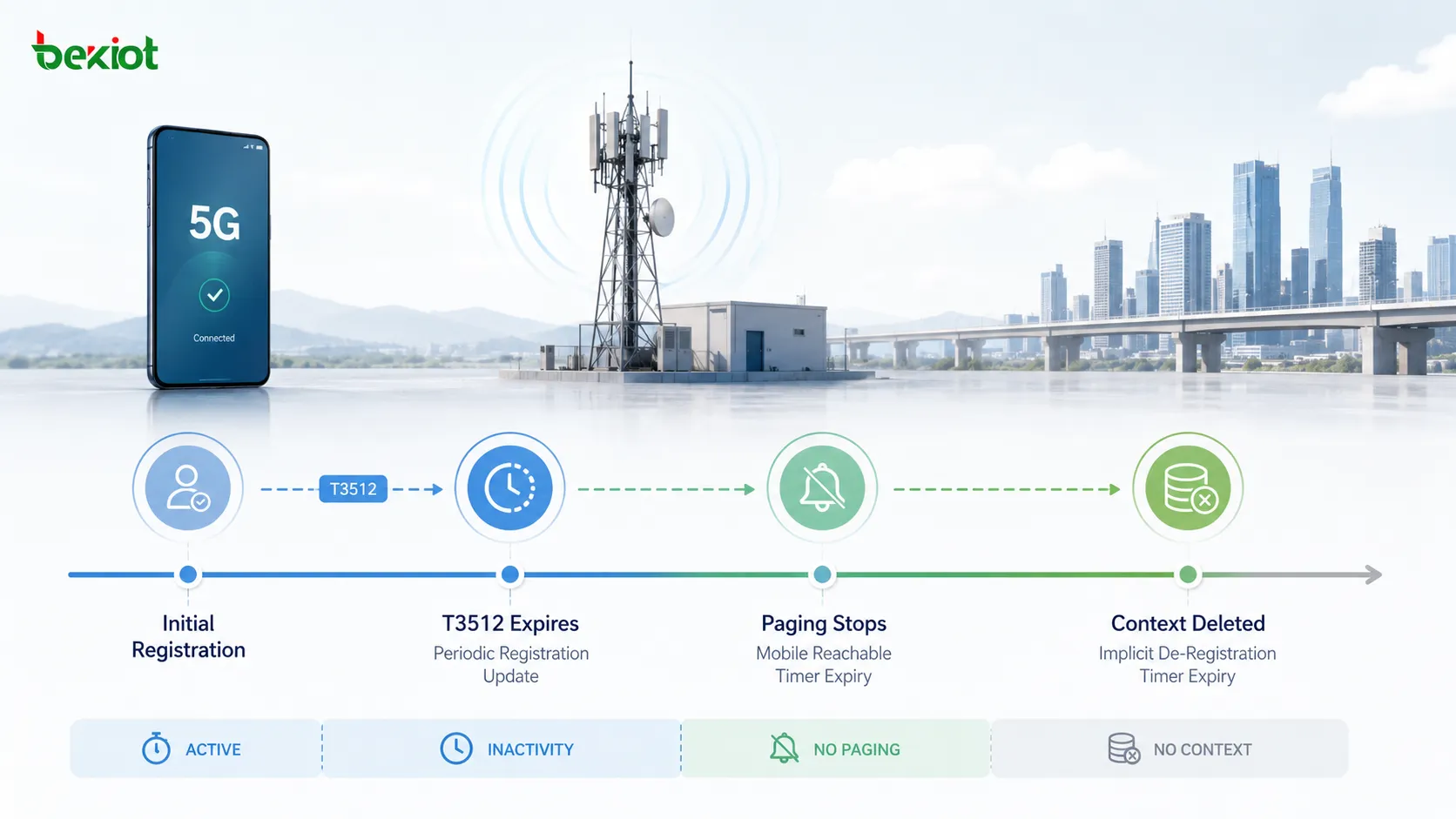
T3512周期登録更新、モバイル到達可能タイマー満了、ページング停止、暗黙的登録解除タイマーによるコンテキスト削除を示す5GCタイマー時系列
3つのタイマーの連続動作により、5GCはUEの周期的な確認からページング停止へ移り、到達性が失われた場合には最終的にコンテキストを削除します。

エンジニアにとって重要なのは、シグナリング上で確認できるタイマーと確認できないタイマーを区別することです。T3512は登録シグナリングを通じてUEに割り当てられます。モバイル到達可能タイマーと暗黙的登録解除タイマーはAMFローカルのパラメータであり、その設定値がシグナリングフロー上を伝送される値として直接取得されることはありません。効果はネットワーク動作から確認できますが、設定そのものはAMFに属します。

よくある質問

登録後もUEが常時接続されないのはなぜですか?

常時接続すると、無線リソースとコアネットワークリソースを浪費します。アイドル動作により、UEとネットワークは登録状態を維持しながらシグナリングを減らせます。

モバイル到達可能タイマーの値はパケットキャプチャで確認できますか?

確認できません。AMFローカルの設定であるため、N1シグナリング手順で通常のネットワーク伝送タイマー値として送られません。

暗黙的登録解除の満了前にUEが戻るとどうなりますか?

最終タイマーの満了前にUEがN1 NASシグナリングを再確立すれば、AMFはタイマーを停止し、保持していたUEコンテキストを引き続き使用できます。

AMFがコンテキスト削除前にページングを停止するのはなぜですか?

UEが到達不能と考えられる場合にページングを停止すると無線リソースを節約できます。一方でコンテキストを保持しておけば、UEがすぐに戻った際に短時間で復旧できます。

暗黙的登録解除はUEが永久に遮断されることを意味しますか?

いいえ。古いUEコンテキストが削除されたことを意味するだけです。UEが再び到達可能になれば、再登録を行ってネットワークコンテキストを再構築できます。

3つのモビリティ管理タイマーは、5GC登録動作の実用的な制御チェーンを形成します。T3512はUEに周期的な状態更新を求めます。モバイル到達可能タイマーは、ページングを続けても効率的でなくなる時点をAMFが判断するために役立ちます。暗黙的登録解除タイマーは、ネットワークがUEコンテキストを解放する最終時点を定めます。3つの連携によって、到達性、シグナリング効率、リソース保護のバランスが維持されます。


おすすめ商品
カタログ
顧客サービス 電話
We use cookie to improve your online experience. By continuing to browse this website, you agree to our use of cookie.

Cookies

This Cookie Policy explains how we use cookies and similar technologies when you access or use our website and related services. Please read this Policy together with our Terms and Conditions and Privacy Policy so that you understand how we collect, use, and protect information.

By continuing to access or use our Services, you acknowledge that cookies and similar technologies may be used as described in this Policy, subject to applicable law and your available choices.

Updates to This Cookie Policy

We may revise this Cookie Policy from time to time to reflect changes in legal requirements, technology, or our business practices. When we make updates, the revised version will be posted on this page and will become effective from the date of publication unless otherwise required by law.

Where required, we will provide additional notice or request your consent before applying material changes that affect your rights or choices.

What Are Cookies?

Cookies are small text files placed on your device when you visit a website or interact with certain online content. They help websites recognize your browser or device, remember your preferences, support essential functionality, and improve the overall user experience.

In this Cookie Policy, the term “cookies” also includes similar technologies such as pixels, tags, web beacons, and other tracking tools that perform comparable functions.

Why We Use Cookies

We use cookies to help our website function properly, remember user preferences, enhance website performance, understand how visitors interact with our pages, and support security, analytics, and marketing activities where permitted by law.

We use cookies to keep our website functional, secure, efficient, and more relevant to your browsing experience.

Categories of Cookies We Use

Strictly Necessary Cookies

These cookies are essential for the operation of the website and cannot be disabled in our systems where they are required to provide the service you request. They are typically set in response to actions such as setting privacy preferences, signing in, or submitting forms.

Without these cookies, certain parts of the website may not function correctly.

Functional Cookies

Functional cookies enable enhanced features and personalization, such as remembering your preferences, language settings, or previously selected options. These cookies may be set by us or by third-party providers whose services are integrated into our website.

If you disable these cookies, some services or features may not work as intended.

Performance and Analytics Cookies

These cookies help us understand how visitors use our website by collecting information such as traffic sources, page visits, navigation behavior, and general interaction patterns. In many cases, this information is aggregated and does not directly identify individual users.

We use this information to improve website performance, usability, and content relevance.

Targeting and Advertising Cookies

These cookies may be placed by our advertising or marketing partners to help deliver more relevant ads and measure the effectiveness of campaigns. They may use information about your browsing activity across different websites and services to build a profile of your interests.

These cookies generally do not store directly identifying personal information, but they may identify your browser or device.

First-Party and Third-Party Cookies

Some cookies are set directly by our website and are referred to as first-party cookies. Other cookies are set by third-party services, such as analytics providers, embedded content providers, or advertising partners, and are referred to as third-party cookies.

Third-party providers may use their own cookies in accordance with their own privacy and cookie policies.

Information Collected Through Cookies

Depending on the type of cookie used, the information collected may include browser type, device type, IP address, referring website, pages viewed, time spent on pages, clickstream behavior, and general usage patterns.

This information helps us maintain the website, improve performance, enhance security, and provide a better user experience.

Your Cookie Choices

You can control or disable cookies through your browser settings and, where available, through our cookie consent or preference management tools. Depending on your location, you may also have the right to accept or reject certain categories of cookies, especially those used for analytics, personalization, or advertising purposes.

Please note that blocking or deleting certain cookies may affect the availability, functionality, or performance of some parts of the website.

Restricting cookies may limit certain features and reduce the quality of your experience on the website.

Cookies in Mobile Applications

Where our mobile applications use cookie-like technologies, they are generally limited to those required for core functionality, security, and service delivery. Disabling these essential technologies may affect the normal operation of the application.

We do not use essential mobile application cookies to store unnecessary personal information.

How to Manage Cookies

Most web browsers allow you to manage cookies through browser settings. You can usually choose to block, delete, or receive alerts before cookies are stored. Because browser controls vary, please refer to your browser provider’s support documentation for details on how to manage cookie settings.

Contact Us

If you have any questions about this Cookie Policy or our use of cookies and similar technologies, please contact us at support@becke.cc .