
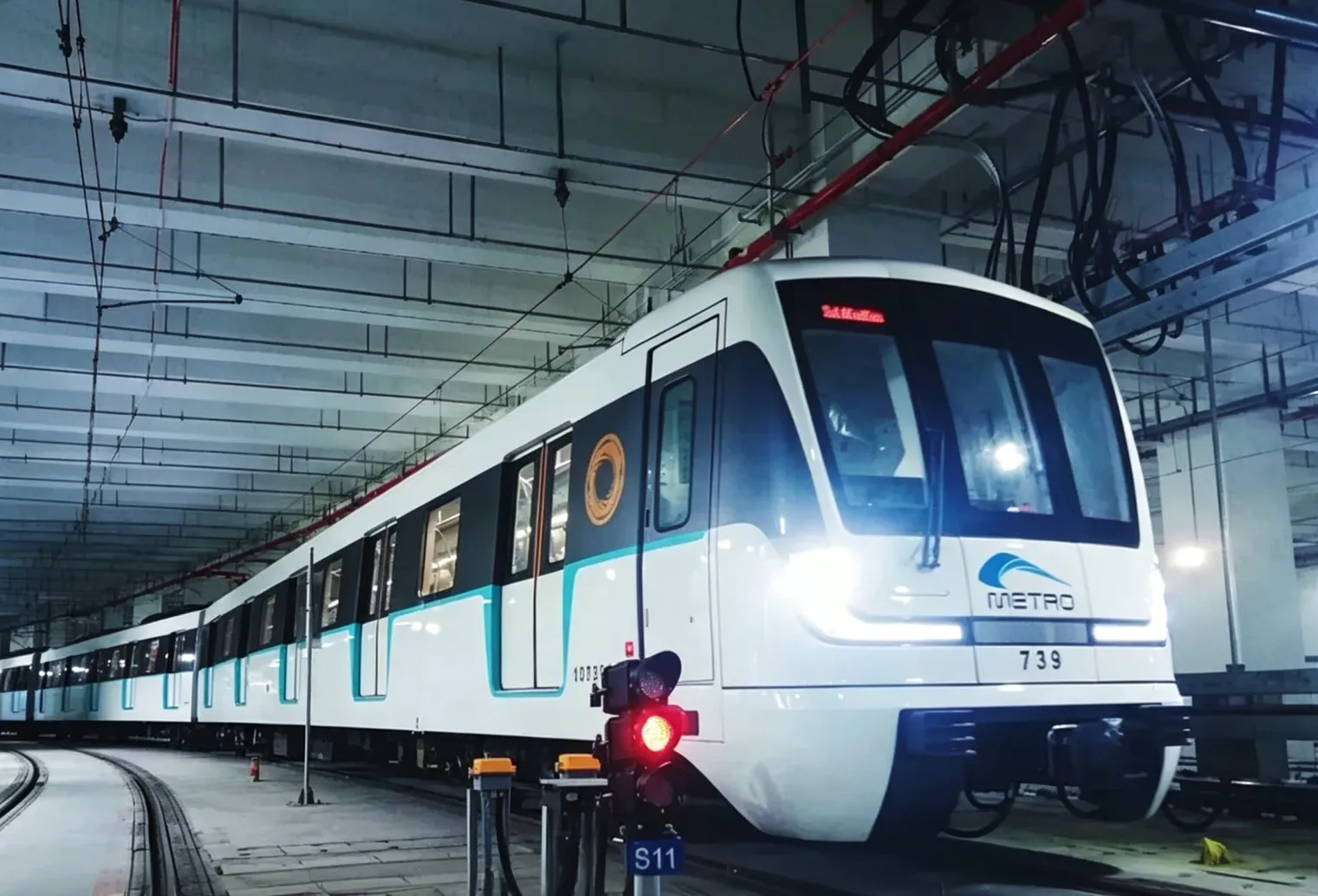
Tailored to the operational characteristics and emergency response needs of Chengdu Metro Line 7, which carries 600,000 to 750,000 passengers daily, this solution delivers a smart one-touch emergency assistance system. Centered on passengers, driven by safety, and focused on efficiency, the solution addresses the pain points of existing help request models and builds an intelligent emergency framework featuring one-touch activation, second-level response, full-process coordination, and closed-loop management. It provides comprehensive, highly reliable emergency communication support and helps create a safer, smarter, and more convenient rail transit environment.
I. Requirements Assessment and System Positioning
1.1 Project Background and Current Pain Points
As a major urban loop line, Chengdu Metro Line 7 connects multiple transportation hubs and core commercial districts. Passenger flow is dense during peak hours, placing extremely high demands on operational safety and emergency response efficiency. Although the line is already equipped with basic emergency facilities, there are still four major pain points. First, assistance channels are limited and rely too heavily on fixed intercom buttons, which can delay help requests. Second, response efficiency is insufficient, as calls require manual answering and may be delayed during peak periods. Third, system linkage is weak, with no unified command and dispatch platform. Fourth, equipment adaptability is inadequate, as traditional terminals are not well suited to the complex metro environment and are prone to failure. Based on this, the present solution is proposed to improve emergency handling capability and enhance passenger confidence in safety.
1.2 System Positioning and Core Objectives
The system is positioned as a passenger-centered, full-scenario, one-stop smart emergency assistance platform. Based on industrial-grade emergency communication technology, it enables one-touch assistance, second-level response, precise positioning, and coordinated handling, becoming an invisible guardian of line operation safety.
The core objectives focus on five dimensions: convenience (multiple channels and simple operation), efficiency (response within 5 seconds), reliability (industrial-grade equipment and 24-hour stability), coordination (closed-loop linkage across all systems), and traceability (full-process recording and review).
1.3 Functional Requirements and Technical Feasibility
1.3.1 Core Functional Requirements
The core functions cover the full process, including multi-channel one-touch assistance (on-site terminals, mobile app, QR code), precise positioning (down to platform zone or carriage number), categorized handling of assistance requests, multi-system linkage (ISCS, CCTV, 110/120, etc.), full-process recording and traceability, and intelligent operation and maintenance (remote monitoring and fault warning).
1.3.2 Technical Feasibility Analysis
Based on mature industrial emergency communication technologies, the system can be rapidly deployed and adapted to existing infrastructure. Industrial-grade terminals in the EX-BT series support wide-temperature operation, dustproof and waterproof protection, and electromagnetic interference resistance, making them suitable for metro environments. Low-latency audio and video transmission with delay of no more than 300 ms, combined with an LTE-M train-to-ground dedicated network, ensures clear and smooth communication. The GIS positioning integration solution supports precise location requirements. A microservices architecture with dual-server hot standby supports high concurrency and seamless integration with existing systems. A complete security protection framework ensures compliance with cybersecurity protection requirements.
II. System Technical Architecture Design
The system adopts a layered architecture consisting of the front-end assistance terminal layer, communication and network layer, back-end service platform layer, and application and integration layer. These layers are seamlessly connected to ensure stability, efficiency, and scalability.
2.1 Overview of the Overall Architecture
Centered on the IP paging and intercom emergency system, the solution integrates industrial-grade terminals, low-latency transmission, and intelligent linkage modules to achieve a full closed loop of front-end triggering, mid-layer transmission, back-end dispatching, and terminal-side handling. It follows the principles of reliability first, usability second, and scalability-oriented adaptation, fully aligning with the line’s operational requirements.
2.2 Detailed Design of Each Layer
2.2.1 Front-End Assistance Terminal Layer
All terminals adopt industrial-grade products and provide diversified methods for assistance requests. EX-BT27 waterproof intercom terminals are deployed on platforms, with at least two units on each side, featuring one-touch activation, anti-false-trigger design, and voice prompts. EX-BT30 onboard terminals are installed in train carriages, one at each end of every carriage, with vibration resistance and interference resistance, connecting directly to the driver’s cab while simultaneously pushing assistance information to the control center. Assistance QR codes are posted in visible station locations, allowing passengers to scan and start video intercom without downloading an app. Staff are equipped with Becke HT-500 handheld terminals for real-time coordinated handling.
2.2.2 Communication and Network Layer
The system adopts a redundant design. Existing LTE-M train-to-ground dedicated networks are used for train-ground communication. Station terminals access the control center through a LAN with dual-routing and dual-device redundancy. Mobile terminals use 4G/5G public networks with VPN-encrypted transmission. The entire network complies with industry standards and is equipped with firewalls and intrusion detection systems to ensure security and stability.
2.2.3 Back-End Service Platform Layer
The core platform is the independently developed IP paging and intercom emergency system, deployed in the control center. It uses a microservices architecture and dual-server hot standby, integrating six core modules to realize assistance reception, audio and video processing, positioning display, coordinated dispatching, data storage with retention of at least 30 days, and intelligent operation and maintenance, ensuring high reliability and scalability.
2.2.4 Application and Integration Layer
The control center is equipped with an ultra-high-definition command display and dispatch console, while staff handheld terminals enable efficient dispatching. Through multi-protocol gateways, the system integrates seamlessly with ISCS, broadcasting, CCTV, and 110/120 emergency platforms, forming a closed-loop coordination mechanism and improving collaborative handling efficiency.
2.3 Key Technology Implementation
The core technologies include low-latency audio and video communication using proprietary encoding and decoding plus WebRTC/RTMP protocols with latency no greater than 300 ms, precise positioning and GIS map services with multi-mode positioning and real-time highlighted display, multi-system linkage and intelligent dispatching with priority-based scheduling and one-touch coordinated response, and security and reliability assurance through data encryption, redundancy and disaster recovery, and intelligent operation and maintenance.
III. Detailed System Function Design
Centered on the core concept of one-touch activation, rapid response, and full-process care, the system is designed with practical functions tailored to the needs of passengers and operations personnel.
3.1 One-Touch Assistance Function Module
On-site terminals feature prominent red buttons on platform units, with anti-false-trigger design. Once pressed, they automatically connect to the control center and provide voice prompts. When onboard terminals are triggered, they connect to the driver’s cab and simultaneously push information to the control center. Terminals support automatic volume adjustment, flashing alerts, and fault self-check. On the mobile side, passengers can scan a QR code to open a lightweight interface, or use the embedded app in the official platform, which supports audio and video intercom and text input with encrypted privacy protection. For assistance categorization and priority, passengers can select the request type, with emergency situations and medical assistance assigned the highest priority to ensure urgent matters are handled first.
3.2 Closed-Loop Handling Process
The handling process consists of six steps. First, assistance is triggered through multiple channels and relevant information is collected. Second, the system provides second-level response within 5 seconds, with pop-up alerts, sound prompts, and automatic CCTV retrieval. Third, coordinated response is launched, triggering broadcasting, rescue, dispatching, and other measures according to the request type. Fourth, on-site handling is carried out by staff using handheld terminals while maintaining real-time coordination. Fifth, after the issue is resolved, the case is marked complete, archived, and the passenger’s needs are confirmed. Sixth, post-incident follow-up generates a report and helps optimize emergency measures.
3.3 Data Processing and User Experience
Real-time data processing adopts an event-driven architecture to ensure efficient response. Audio and video data is stored for at least 30 days and supports multi-condition retrieval, with strict privacy protection. An assistance database is established for intelligent analysis and dispatch optimization. Human-centered design includes convenient operation, bilingual Chinese-English and accessibility support, immediate reassuring feedback, and post-event care and follow-up, all of which enhance the passenger experience.
IV. Implementation Plan and Recommendations
4.1 Implementation Steps and Rollout
The project is promoted in four stages. First is pilot deployment over one to three months, selecting key interchange stations and one train to deploy equipment, complete system integration and staff training, and optimize through on-site support. Second is effectiveness evaluation in the fourth month, assessing indicators such as response time and equipment failure rate, while collecting feedback for improvement. Third is full deployment from month five to month twelve, covering all 31 stations and all trains, with integration completed and all staff trained. Fourth is ongoing publicity and promotion through multiple channels to familiarize passengers with the system.
4.2 Cost-Benefit Analysis
Costs mainly include construction costs such as hardware procurement, software development and integration, and training, as well as operation and maintenance costs, which are about 10% of the construction investment per year. Bulk procurement and mature technologies can effectively control costs. In terms of benefits, the social value is significant, improving passenger confidence, emergency efficiency, and metro image. The economic value is also substantial, reducing operational delays and labor costs while enhancing brand value, resulting in a positive return on investment.
4.3 Recommendations for Future Optimization
After the system goes live, continuous technical support should be provided. It is recommended to introduce AI-assisted functions such as voice and image recognition to improve processing efficiency. Service scope can also be expanded by adding non-emergency assistance, multilingual services, and integration with the wider city emergency response system, ensuring that the system continues to evolve and deliver greater value.