リモート電話帳の設定ガイド

はじめに

XMLリモート電話帳は、XML形式で保存されるネットワークベースの電話帳です。この機能を使用するには、XML電話帳ファイルをサーバーにアップロードし、電話のリモート電話帳Webページで対応するサーバーURLを設定します。設定を適用すると、電話はXML電話帳ファイルを直接ダウンロードして使用できます。

FTPサーバー上のXMLリモート電話帳のURL形式は次のとおりです:

ftp://Server_IP/XML_File_Name または ftp://Server_IP/Folder_Name/XML_File_Name

TFTPサーバー上のXMLリモート電話帳のURL形式は次のとおりです:

tftp://Server_IP/XML_File_Name

リモート電話帳のXML形式

単一レベルリモート電話帳

単一レベルのリモート電話帳は、カテゴリ構造なしで1つのディレクトリにすべての連絡先を表示します。XMLヘッダーと終了タグは固定されており、名前を変更したり変更したりしてはいけません。

例:次のXMLファイルは完全なリモート電話帳ファイルです。連絡先名や電話番号などの情報を含め、複数の連絡先を順番に追加できます。
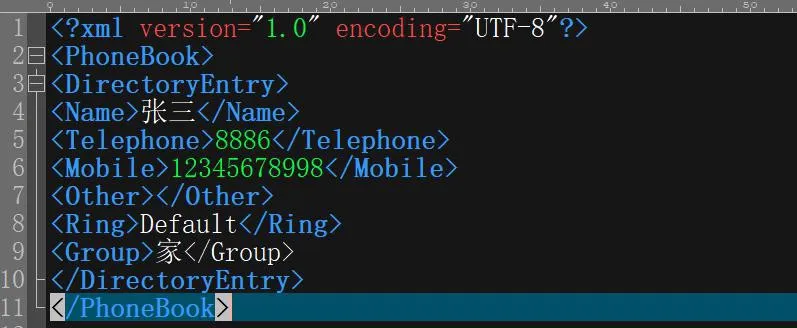
単一レベルリモート電話帳の例

説明:

1. はXML宣言です。必須であり、電話はUTF-8エンコーディングをサポートしています。

2. は電話帳のメインノードを定義します。電話帳ディレクトリの開始と終了を示し、すべての連絡先エントリはその中に配置されます。

3. は個々の連絡先エントリを定義します。各開始タグには対応する終了タグが必要であり、連絡先の詳細はそれらの間に記述されます。

マルチレベルリモート電話帳

マルチレベルのリモート電話帳では、連絡先を部門やカテゴリに整理し、各ディレクトリの下にさらにサブカテゴリを設けることができます。この構造には複数のXMLファイルが必要です。

第1レベルのXMLファイルを作成する方法:

たとえば、Index.xmlという名前を付けます。

内容:
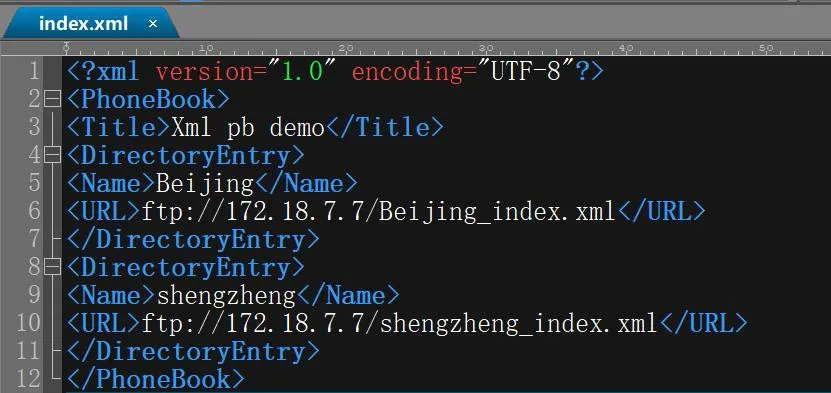
Index.xmlの例

説明:

1. は電話帳のメインディレクトリノードを定義します。

2. は個々のディレクトリエントリを定義し、すべてのタグは正しく対応している必要があります。

Name: Beijingなど、次のレベルのディレクトリの表示名を定義します。

URL: 次のレベルのディレクトリのプロトコル、サーバーIP、XMLファイル名を定義します。この例では、次のレベルのファイルはBeijing_index.xmlShengzheng_index.xmlです。

第2レベルのXMLファイルを作成する方法:

第2レベルのXMLファイルは、第1レベルのファイルと同じ方法で分類構造を続けることができます。2レベルだけでよい場合は、第3レベルの連絡先ファイル形式に直接スキップできます。

例:Beijing_index.xml
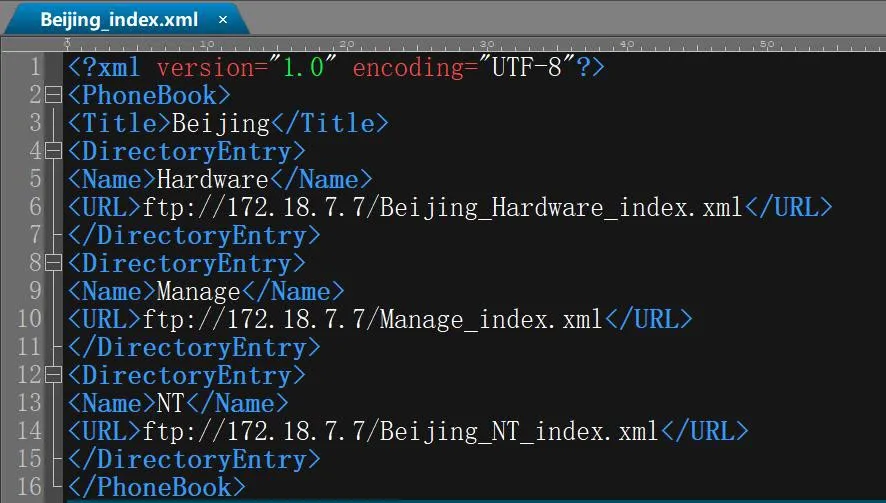
第2レベルXMLファイルの例

第3レベルのXMLファイルを作成する方法:

例:Beijing_Hardware_index.xml
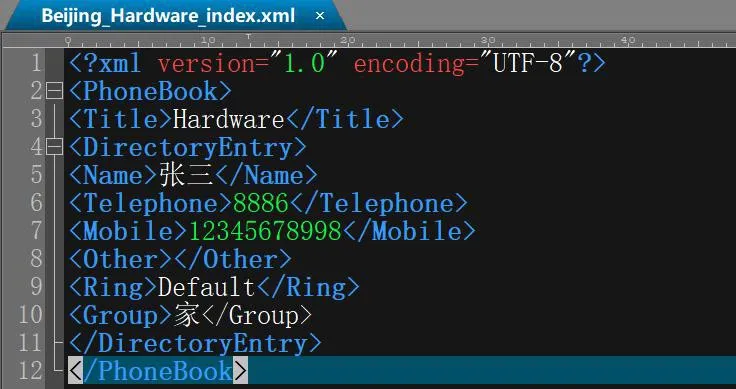
第3レベルXMLファイルの例

説明:このファイルには実際の連絡先エントリが含まれており、その形式は単一レベルリモート電話帳と同じ構造に従います。

リモート電話帳サーバーの設定

FTPサーバーの設定

FTPサーバーソフトウェアを使用します:FTPソフトウェアアイコン

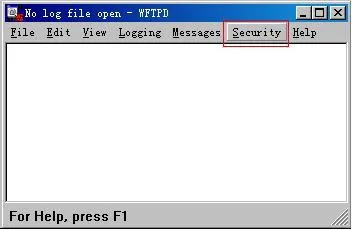
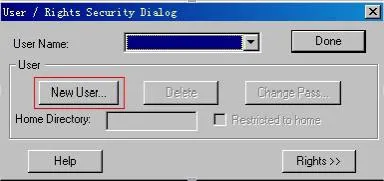
ソフトウェアを開き、SecurityUser/Rightsをクリックして、以下に示す設定ページに入ります:

FTPソフトウェアのSecurityメニューに入る

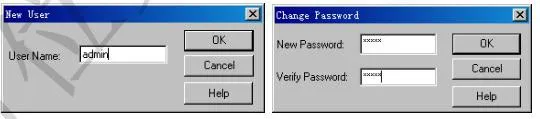
New Userを選択して、以下に示すようにユーザー名とパスワードを作成します:
FTPサーバーで新しいユーザーを作成する

次に、Home Directoryで、リモート電話帳XMLファイルが保存されているフォルダを指定します。
Home Directory設定

たとえば、XMLファイルがE:ドライブのFTPディレクトリ内のremote_rightフォルダに保存されている場合は、以下に示すように設定します:
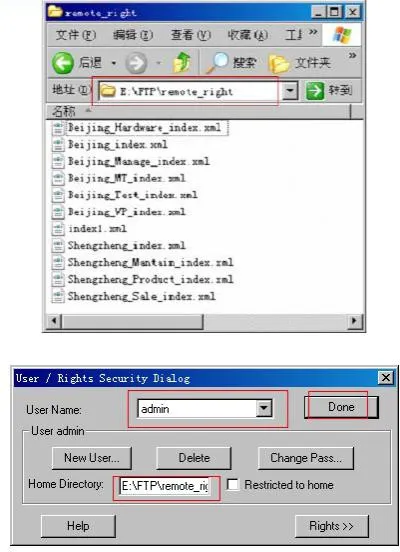
FTPファイル保存パスの例

パス設定が完了したら、DoneをクリックしてFTPサーバー設定を完了します。

TFTPサーバーの設定

TFTPサーバーソフトウェアを使用します:TFTPソフトウェアアイコン

TFTPソフトウェアを起動すると、インターフェースは以下に示すように表示されます:
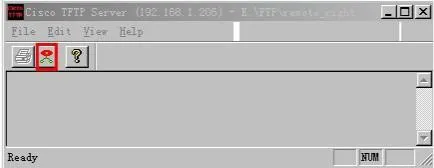
TFTPソフトウェアインターフェース

上の画像の赤い枠で強調表示されているオプションボタンをクリックして、次の設定ページを開きます:
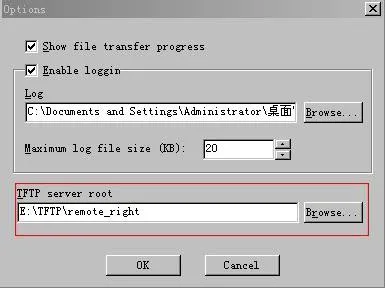
TFTP設定で保存パスを参照する

TFTP server rootフィールドでBrowseをクリックし、リモート電話帳XMLファイルが保存されているフォルダを選択します。たとえば、E:ドライブのTFTPディレクトリ内のremote_rightフォルダを選択します。

IP電話でのリモート電話帳の設定

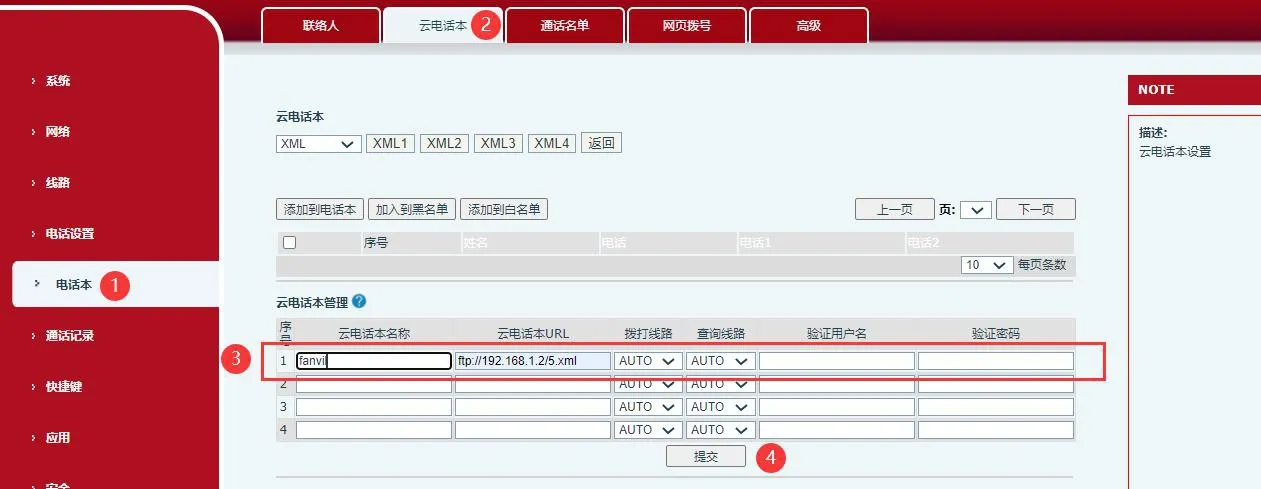
電話のWebインターフェースを開き、リモート電話帳ページに移動します:Phone BookCloud PhonebookCloud Phonebook Management。以下に示します:

電話Webインターフェースのクラウド電話帳管理ページ

次の設定を行います:

1. Phonebook Name:家族、同級生、同僚など、任意の名前を入力します。

2. Server Address:使用中のサーバータイプに基づいて正しいアドレスを入力します。

FTPサーバーを使用する場合、入力:
ftp://FTP_Server_IP_Address/XML_File_Name
例:ftp://192.168.1.206/index1.xml

TFTPサーバーを使用する場合、入力:
tftp://TFTP_Server_IP_Address/XML_File_Name
例:tftp://192.168.1.206/index1.xml

3. Outgoing Line:発信に使用する回線を選択します。デフォルトオプションが選択されている場合、通常は回線1を介して通話が行われます。

4. Username and Password:FTPサーバーアクセスに必要であり、FTPサーバーで作成された認証情報と一致する必要があります。これらのフィールドはTFTPでは必要ありません。

設定を保存した後、電話でContactsCloud Phonebookに移動します。電話は設定されたサーバーからリモート電話帳をダウンロードし、連絡先リストをローカルに表示できます。ユーザーは、直接発信、番号の取得、連絡先検索、メッセージ送信、ローカル連絡先へのエントリ追加、ブラックリストへのエントリ追加などのアクションを実行できます。

*注1:URLが正しいプロトコルプレフィックスを使用していることを確認してください。FTPサーバーにはFTPを、TFTPサーバーにはTFTPを、その他のサポートされているプロトコルには適切な名前を使用してください。
*注2:リモート電話帳機能を使用する場合、サーバーはアクティブな状態を維持する必要があり、ユーザー名とパスワードを正しく入力する必要があります。

カタログ
顧客サービス 電話
We use cookie to improve your online experience. By continuing to browse this website, you agree to our use of cookie.

Cookies

This Cookie Policy explains how we use cookies and similar technologies when you access or use our website and related services. Please read this Policy together with our Terms and Conditions and Privacy Policy so that you understand how we collect, use, and protect information.

By continuing to access or use our Services, you acknowledge that cookies and similar technologies may be used as described in this Policy, subject to applicable law and your available choices.

Updates to This Cookie Policy

We may revise this Cookie Policy from time to time to reflect changes in legal requirements, technology, or our business practices. When we make updates, the revised version will be posted on this page and will become effective from the date of publication unless otherwise required by law.

Where required, we will provide additional notice or request your consent before applying material changes that affect your rights or choices.

What Are Cookies?

Cookies are small text files placed on your device when you visit a website or interact with certain online content. They help websites recognize your browser or device, remember your preferences, support essential functionality, and improve the overall user experience.

In this Cookie Policy, the term “cookies” also includes similar technologies such as pixels, tags, web beacons, and other tracking tools that perform comparable functions.

Why We Use Cookies

We use cookies to help our website function properly, remember user preferences, enhance website performance, understand how visitors interact with our pages, and support security, analytics, and marketing activities where permitted by law.

We use cookies to keep our website functional, secure, efficient, and more relevant to your browsing experience.

Categories of Cookies We Use

Strictly Necessary Cookies

These cookies are essential for the operation of the website and cannot be disabled in our systems where they are required to provide the service you request. They are typically set in response to actions such as setting privacy preferences, signing in, or submitting forms.

Without these cookies, certain parts of the website may not function correctly.

Functional Cookies

Functional cookies enable enhanced features and personalization, such as remembering your preferences, language settings, or previously selected options. These cookies may be set by us or by third-party providers whose services are integrated into our website.

If you disable these cookies, some services or features may not work as intended.

Performance and Analytics Cookies

These cookies help us understand how visitors use our website by collecting information such as traffic sources, page visits, navigation behavior, and general interaction patterns. In many cases, this information is aggregated and does not directly identify individual users.

We use this information to improve website performance, usability, and content relevance.

Targeting and Advertising Cookies

These cookies may be placed by our advertising or marketing partners to help deliver more relevant ads and measure the effectiveness of campaigns. They may use information about your browsing activity across different websites and services to build a profile of your interests.

These cookies generally do not store directly identifying personal information, but they may identify your browser or device.

First-Party and Third-Party Cookies

Some cookies are set directly by our website and are referred to as first-party cookies. Other cookies are set by third-party services, such as analytics providers, embedded content providers, or advertising partners, and are referred to as third-party cookies.

Third-party providers may use their own cookies in accordance with their own privacy and cookie policies.

Information Collected Through Cookies

Depending on the type of cookie used, the information collected may include browser type, device type, IP address, referring website, pages viewed, time spent on pages, clickstream behavior, and general usage patterns.

This information helps us maintain the website, improve performance, enhance security, and provide a better user experience.

Your Cookie Choices

You can control or disable cookies through your browser settings and, where available, through our cookie consent or preference management tools. Depending on your location, you may also have the right to accept or reject certain categories of cookies, especially those used for analytics, personalization, or advertising purposes.

Please note that blocking or deleting certain cookies may affect the availability, functionality, or performance of some parts of the website.

Restricting cookies may limit certain features and reduce the quality of your experience on the website.

Cookies in Mobile Applications

Where our mobile applications use cookie-like technologies, they are generally limited to those required for core functionality, security, and service delivery. Disabling these essential technologies may affect the normal operation of the application.

We do not use essential mobile application cookies to store unnecessary personal information.

How to Manage Cookies

Most web browsers allow you to manage cookies through browser settings. You can usually choose to block, delete, or receive alerts before cookies are stored. Because browser controls vary, please refer to your browser provider’s support documentation for details on how to manage cookie settings.

Contact Us

If you have any questions about this Cookie Policy or our use of cookies and similar technologies, please contact us at support@becke.cc .