
百科事典
2026-05-14 14:26:02
実際の融合通信プロジェクトでビデオトランスコーディングが不可欠な理由
ビデオトランスコーディングは融合通信プロジェクトに不可欠であり、H.265カメラ映像をWebRTCディスパッチ、SIPシステム、複数端末アクセスに適合させます。

ベッケテレコム

実際の融合通信プロジェクトでビデオトランスコーディングが不可欠な理由

融合通信システムは、緊急指揮、公共安全、消防救助、産業ディスパッチ、交通、大規模セキュリティで広く使われています。指令員は一つの平台で音声、無線、映像、アラーム、現場リソースを同時に扱えます。

しかし多くの現場では、映像互換性が想定以上に難しいという隠れた問題が現れます。課題はカメラをネットワークに接続することだけではなく、エンコード、プロトコル、端末のデコード能力、ブラウザ対応、リアルタイム性能にあります。

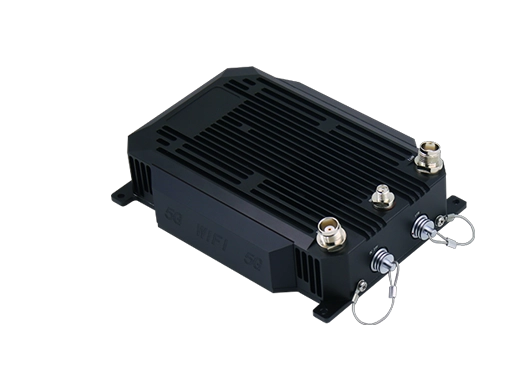
監視カメラ H265ストリーム WebRTC指令台 SIP端末 融合通信平台を接続するビデオトランスコーディング装置
ビデオトランスコーディングは監視映像をWebRTC指令、SIP端末、融合通信平台へ橋渡しします。

統一ディスパッチに潜むギャップ

多くのプロジェクトは、音声指令、ビデオ会議、SIP通話、無線連携、アラーム、GIS、監視映像を含む統一平台を中心に設計されます。

構成図では全てがつながって見えますが、実装段階では映像アクセスで互換性問題が起こりやすくなります。VMSで安定再生できるカメラ映像が、WebRTC指令台や通信端末でそのまま使えるとは限りません。

カメラ、平台、ブラウザ、端末、メディアサーバーが異なる形式やデコード方式を使うため、映像層は最初から中核アーキテクチャとして計画する必要があります。

根本原因は映像エンコード

監視システムではH.265が広く採用されています。同等画質でH.264よりビットレートをほぼ半分にできるため、合理的な選択です。

都市監視、工業団地、交通、エネルギー、公共安全では、ネットワーク負荷と保存容量の削減効果が大きくなります。

一方、融合通信平台の多くはWebRTCに依存します。主流ブラウザでのH.265対応はまだ完全ではなく、ここで監視映像と通信平台の衝突が生じます。

WebRTCが全てのカメラ映像を読めない理由

WebRTCはブラウザやソフトウェアクライアントでリアルタイム音声・映像を扱えるため、指令台、ビデオ通話、遠隔協同、指揮センターに適しています。

しかし全ての形式問題を解決するわけではありません。多くのカメラはH.265を出力し、多くのWebRTC環境はH.264などブラウザ対応形式を前提にします。

端末側にも同じ問題があります。多くのIP電話、指令端末、ソフトクライアント、現場端末は強力なH.265ハードウェアデコードを備えていません。

融合通信では、映像ストリームが存在するかだけでなく、必要な全端末がリアルタイムにデコードし、表示し、利用できるかが重要です。

メディアサーバーは常にリアルタイム変換向けではない

多くの通信平台はSIPとメディアフレームワークを使い、音声処理、信令、会議、呼制御に強みを持ちます。

しかしビデオ変換は音声転送よりはるかに重い処理です。多くの構成ではメディアサーバーは映像を透過転送するだけで、大規模なリアルタイム変換には向きません。

中核サーバーで全てを処理すると複雑化し安定性リスクが増えます。専用装置が平台や端末の前で変換を担う方が実用的です。

専用変換層が必要になる

監視映像を含むプロジェクトでは、ビデオトランスコーダーをインフラとして扱うべきです。役割は監視ネットワークと通信ネットワークの間で映像形式を変換することです。

カメラ、モバイル映像、レコーダー、仮設監視、既存平台のH.265をH.264など端末が使える形式へ変換します。

指令用途ではリアルタイム性が重要です。映像が音声指示より大きく遅れると判断を妨げるため、遅延は十分低く保つ必要があります。
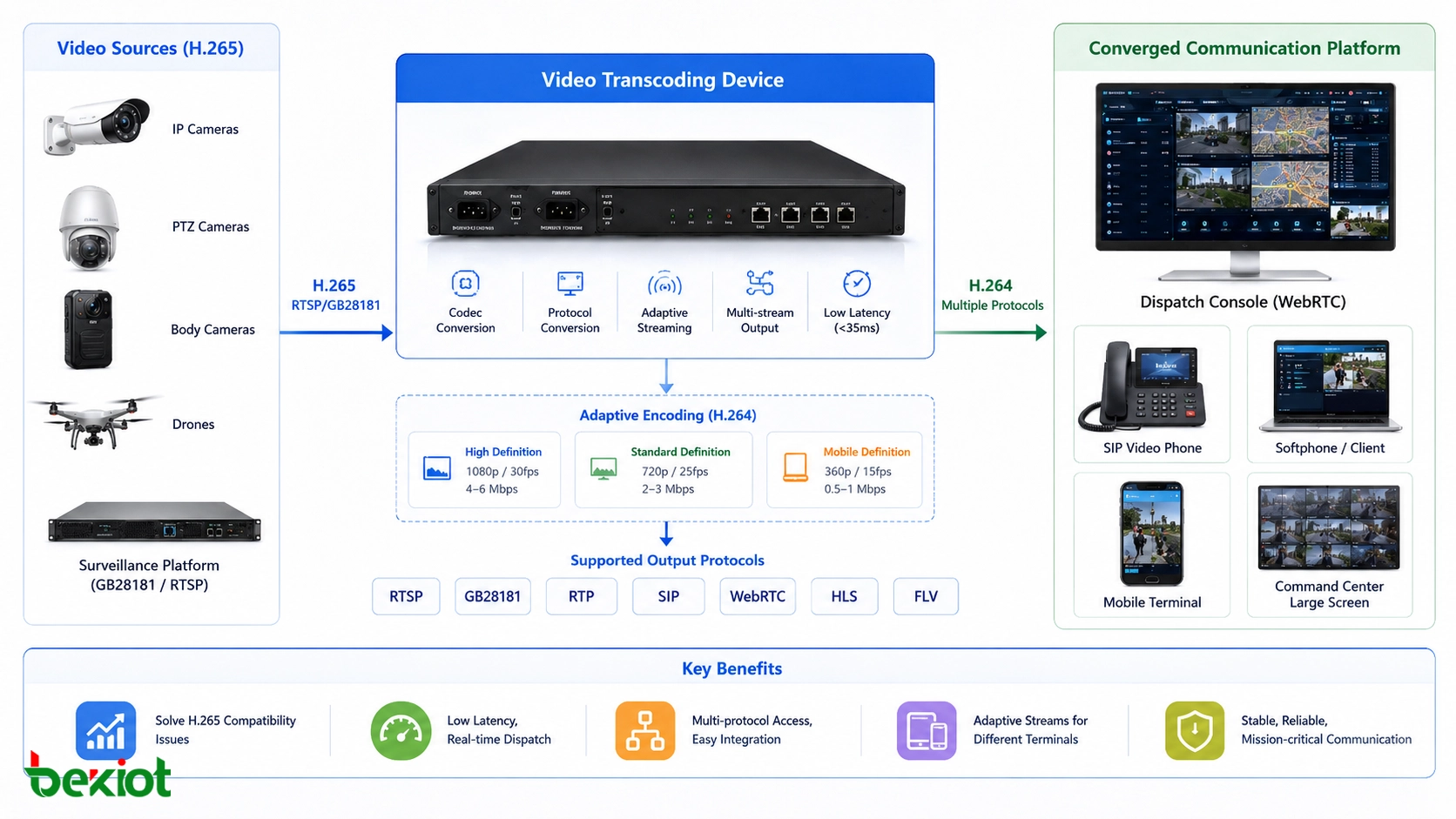
カメラ モバイル映像ソース 指令台 通信端末向けH265からH264への変換フロー
専用変換層がH.265監視映像を端末で利用できる形式へ変換します。

端末ごとの適応ストリームが重要

コーデック変換だけでは不十分です。端末環境は、高精細指令画面、4G携帯端末、ソフトクライアントなど多様です。

装置は解像度、フレームレート、ビットレートを調整し、同じ映像源から複数のプロファイルを出力できる必要があります。

高ビットレートの一つの映像を全員に配信すると、低帯域端末では停止や遅延が発生します。適応変換は全体の安定性を高めます。

プロトコルの分断も障壁になる

融合通信にはSIP、GB/T 28181、RTP、RTSP、FLV、HLS、WebRTCなどが混在します。

各プロトコルは異なる平台、装置、メーカー、用途に結びついています。そのためH.265からH.264への変換だけでは足りません。

柔軟な入力と出力により、カメラ、監視平台、ブラウザ、モバイル端末、通信平台を少ない開発で接続できます。

実用的な構成の考え方

実用構成では、変換装置を監視側と通信平台側の間に置きます。

入力側ではカメラ、GB/T 28181平台、RTSPソースなどを受け、出力側ではWebRTC指令台、SIP映像端末、ブラウザ、指揮画面、ソフトクライアントに適した映像を提供します。

平台は指揮フロー、ユーザー、呼制御、アラーム、調度ロジックに集中し、変換層がメディア変換とプロトコル適応を担当します。Becke Telcomは融合通信の統合パートナーとしてこの層を組み込めます。
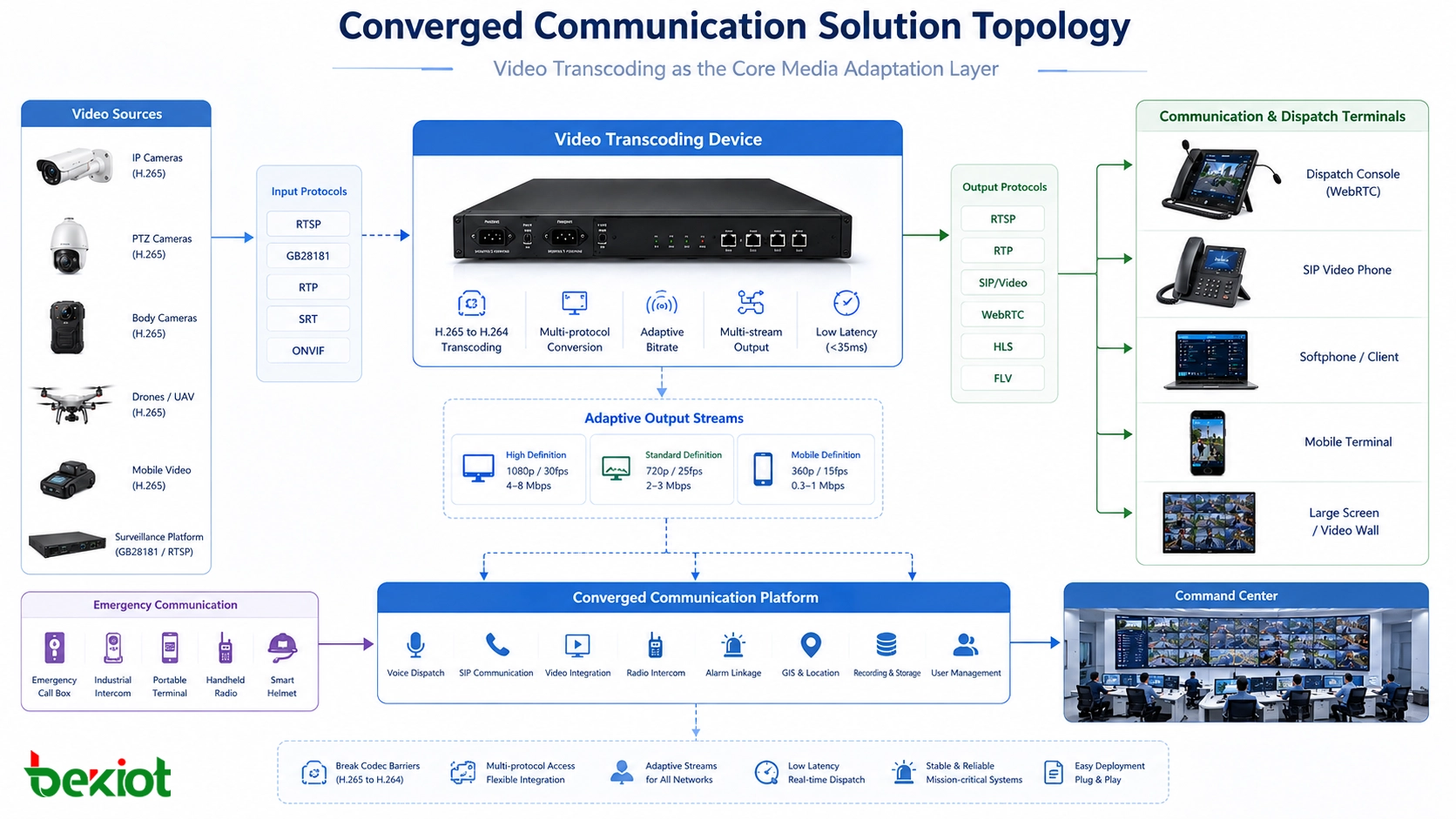
ビデオ変換装置 監視平台 SIP指令 緊急端末 指揮センターを含む融合通信トポロジー
ビデオ変換は融合通信の中核メディア適応層として設計すべきです。

変換を無視した場合のリスク

変換装置は指令台、録画サーバー、映像壁、端末ほど目立たないため軽視されがちです。

実際の納入では、コーデック不一致、ブラウザ再生失敗、端末デコード制限、高ビットレート、未対応プロトコル、転送不安定が起こります。

これらは指揮効率を直接低下させます。検収では、映像の起動速度、鮮明度、遅延、多端末表示が重視されます。

設計時の選定要素

まず入力映像源を確認します。カメラのコーデック、プロトコル、解像度、フレームレート、ビットレート、平台接続方式が対象です。H.265は特に重要です。

次に出力要件を確認します。H.264、WebRTC対応、ブラウザ用HLS、内部用RTSPなどが必要になる場合があります。

最後に実機で低遅延、安定デコード、スムーズな切替、多端末アクセスを試験する必要があります。

設計領域 主要要件 プロジェクト価値
コーデック変換 H.265をH.264などへ変換 監視映像をWebRTCと端末で利用可能にする
低遅延処理 指令用途に適した遅延を維持 映像が判断に遅れないようにする
適応出力 解像度、フレームレート、ビットレートを調整 LAN、4G、混在網での品質を向上
プロトコル互換 SIP、GB/T 28181、RTP、RTSP、FLV、HLS、WebRTCを支援 統合難度を下げる
システム統合 平台、映像、ブラウザ、端末と連携 映像を指揮系統の信頼できる一部にする

この層が最も役立つ場所

監視映像を通信や指令環境に入れるプロジェクトでは、ビデオ変換は有効です。緊急指揮、公共安全、消防、工業制御、交通、スマートパーク、エネルギー、港湾、鉱山、キャンパスなどが該当します。

緊急時は現場把握、産業では遠隔点検や安全監視、交通では駅・トンネル・保守チームの連携に役立ちます。

共通点は、映像を独立した監視平台に閉じ込めるのではなく、通信ワークフローで使えるようにすることです。

結論

実際の融合通信プロジェクトは、音声指令、SIP信令、平台連携だけでは不十分です。監視映像が含まれるなら、ビデオ変換をアーキテクチャに組み込む必要があります。

専用装置はコーデック変換、ビットレート適応、フレームレートと解像度調整、SIP、GB/T 28181、RTP、RTSP、FLV、HLS、WebRTCの橋渡しを行います。

エンジニアにとって結論は明確です。ビデオトランスコーディングは装飾機能ではなく、監視映像を融合通信のリアルタイムで信頼できる資源にする基盤です。

FAQ

なぜ融合通信にビデオ変換が必要ですか?

多くの監視カメラがH.265を出力する一方、WebRTC指令台、ブラウザ、IP電話、通信端末がH.265を確実にデコードできないためです。

H.265はH.264より優れていますか?

保存容量と帯域効率ではH.265が有利ですが、多くの端末やブラウザではH.264の方が広く対応されています。

通信平台だけで変換できますか?

常に可能ではありません。リアルタイム動画変換は負荷が高く、専用装置の方が安定しやすいです。

どのプロトコルに対応すべきですか?

SIP、GB/T 28181、RTP、RTSP、FLV、HLS、WebRTC、およびプロジェクトで必要な映像アクセス方式です。

変換を無視するとどうなりますか?

黒画面、未対応ストリーム、高遅延、ぼやけた映像、不安定再生、端末互換性問題が発生しやすくなります。
おすすめ商品
カタログ
顧客サービス 電話
We use cookie to improve your online experience. By continuing to browse this website, you agree to our use of cookie.

Cookies

This Cookie Policy explains how we use cookies and similar technologies when you access or use our website and related services. Please read this Policy together with our Terms and Conditions and Privacy Policy so that you understand how we collect, use, and protect information.

By continuing to access or use our Services, you acknowledge that cookies and similar technologies may be used as described in this Policy, subject to applicable law and your available choices.

Updates to This Cookie Policy

We may revise this Cookie Policy from time to time to reflect changes in legal requirements, technology, or our business practices. When we make updates, the revised version will be posted on this page and will become effective from the date of publication unless otherwise required by law.

Where required, we will provide additional notice or request your consent before applying material changes that affect your rights or choices.

What Are Cookies?

Cookies are small text files placed on your device when you visit a website or interact with certain online content. They help websites recognize your browser or device, remember your preferences, support essential functionality, and improve the overall user experience.

In this Cookie Policy, the term “cookies” also includes similar technologies such as pixels, tags, web beacons, and other tracking tools that perform comparable functions.

Why We Use Cookies

We use cookies to help our website function properly, remember user preferences, enhance website performance, understand how visitors interact with our pages, and support security, analytics, and marketing activities where permitted by law.

We use cookies to keep our website functional, secure, efficient, and more relevant to your browsing experience.

Categories of Cookies We Use

Strictly Necessary Cookies

These cookies are essential for the operation of the website and cannot be disabled in our systems where they are required to provide the service you request. They are typically set in response to actions such as setting privacy preferences, signing in, or submitting forms.

Without these cookies, certain parts of the website may not function correctly.

Functional Cookies

Functional cookies enable enhanced features and personalization, such as remembering your preferences, language settings, or previously selected options. These cookies may be set by us or by third-party providers whose services are integrated into our website.

If you disable these cookies, some services or features may not work as intended.

Performance and Analytics Cookies

These cookies help us understand how visitors use our website by collecting information such as traffic sources, page visits, navigation behavior, and general interaction patterns. In many cases, this information is aggregated and does not directly identify individual users.

We use this information to improve website performance, usability, and content relevance.

Targeting and Advertising Cookies

These cookies may be placed by our advertising or marketing partners to help deliver more relevant ads and measure the effectiveness of campaigns. They may use information about your browsing activity across different websites and services to build a profile of your interests.

These cookies generally do not store directly identifying personal information, but they may identify your browser or device.

First-Party and Third-Party Cookies

Some cookies are set directly by our website and are referred to as first-party cookies. Other cookies are set by third-party services, such as analytics providers, embedded content providers, or advertising partners, and are referred to as third-party cookies.

Third-party providers may use their own cookies in accordance with their own privacy and cookie policies.

Information Collected Through Cookies

Depending on the type of cookie used, the information collected may include browser type, device type, IP address, referring website, pages viewed, time spent on pages, clickstream behavior, and general usage patterns.

This information helps us maintain the website, improve performance, enhance security, and provide a better user experience.

Your Cookie Choices

You can control or disable cookies through your browser settings and, where available, through our cookie consent or preference management tools. Depending on your location, you may also have the right to accept or reject certain categories of cookies, especially those used for analytics, personalization, or advertising purposes.

Please note that blocking or deleting certain cookies may affect the availability, functionality, or performance of some parts of the website.

Restricting cookies may limit certain features and reduce the quality of your experience on the website.

Cookies in Mobile Applications

Where our mobile applications use cookie-like technologies, they are generally limited to those required for core functionality, security, and service delivery. Disabling these essential technologies may affect the normal operation of the application.

We do not use essential mobile application cookies to store unnecessary personal information.

How to Manage Cookies

Most web browsers allow you to manage cookies through browser settings. You can usually choose to block, delete, or receive alerts before cookies are stored. Because browser controls vary, please refer to your browser provider’s support documentation for details on how to manage cookie settings.

Contact Us

If you have any questions about this Cookie Policy or our use of cookies and similar technologies, please contact us at support@becke.cc .